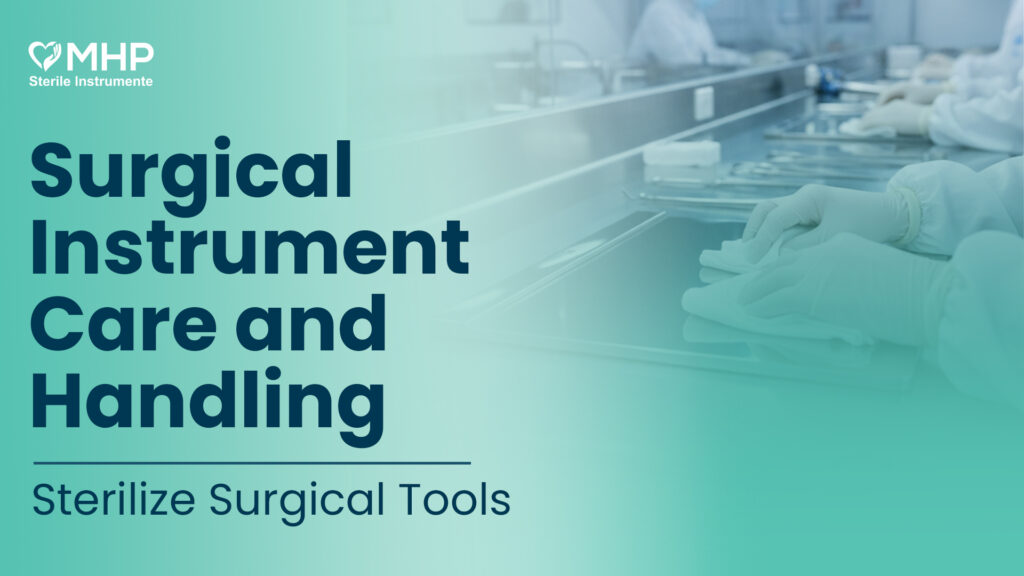
Surgical Instrument Care and Handling: Sterilize Surgical Tools
Proper care of your surgical instruments begins immediately after use: clean and dry your instruments using effective for manual cleaning methods, appropriate cleaning brushes, and rinse cycle and before sterilization steps to ensure that your surgical instruments are fully functional; stainless steel surgical instruments and stainless steel instruments require proper care because instrument surfaces and the surface of the instrument can corrode if you place instruments in saline or use incorrect detergents that may damage the instrument, so instruments must be rinsed, inspected, and lubricated with surgical instrument lubricants where recommended, particularly for delicate instruments and cutting instruments, and then store instruments following the manufacturer’s instructions for cleaning and sterilizing surgical instruments so that instruments and equipment are ready for the next procedure and do not become damaged—the process of surgical instrument maintenance means instruments should be used, handled, and stored according to the proper surgical instrument guidance to ensure instruments need no repair and surgical instruments are fully functional when required.
Surgical Instrument Care Basics
Surgical instruments care and handling begins immediately after use: instruments must be soaked and cleaned surgical instruments under warm running water to remove gross soil, using a suitable detergent and effective cleaning method such as manual cleaning with cleaning brushes or ultrasonic cleaning where ultrasonic waves create bubbles in the solution to loosen debris; rinse instruments thoroughly to remove all detergent residue, then dry instruments thoroughly to minimize condensation on the instruments and prevent corrosion, because condensation can prevent steam from reaching and sterilizing hinged instruments and other areas. For stainless steel surgical instruments, including cutting instruments, scissors, and needle holders, inspect the surface of the instrument and the hinge or hinge area to ensure they are visibly clean and free of debris; instruments that have any metal-to-metal contact or delicate instruments should be opened and lubricated with surgical instrument lubricants to maintain hinged instruments and keep surgical instruments fully functional. Mechanical cleaning and effective for manual cleaning methods both play a role in an overall instrument cleaning cycle, but only proper sterilization—typically using an autoclave—will render instruments sterile, so always dry your instruments, clean and dry your instruments carefully, then load autoclave trays to sterilize; following these steps for instrument care and surgical instrument care will improve surgical instruments’ longevity and ensure sterile surgical tools ready for use.
Importance of Surgical Instrument Care
Proper care of surgical instruments will improve their longevity and function. Proper care and handling of your valuable surgical instruments will improve their longevity and performance. Surgical instrument care begins when you use them and must include cleaning instruments immediately after use to prevent blood and debris from drying on their surfaces; instruments must be rinsed, cleaned, and dried to minimize corrosion and to ensure steam reaches and sterilizes them during the autoclave sterilization cycle. Effective cleaning methods include manual cleaning with detergent and soft cleaning brushes, mechanical cleaning, and ultrasonic cleaning—ultrasonic waves create bubbles in the solution that loosen soil, making ultrasonic an effective cleaning method for delicate instruments, hinged instruments, cutting instruments, scissors, and needle holders. For hinged instruments and those that have any metal-to-metal contact, clean surgical instruments under warm running water, rinse instruments thoroughly, then lubricate all instruments with surgical instrument lubricants and dry instruments thoroughly to minimize condensation on the instruments that can cause damage or prevent steam from reaching and sterilizing; this helps stainless steel surgical instruments remain visibly clean and free of residue. After the cleaning cycle and before the sterilization cycle, inspect to ensure instruments are fully functional and free of bioburden, then place them in the autoclave to render them sterile; proper care and handling, including correct storage of sterile instruments, will improve their longevity and ensure your surgical tools are safe and ready for use.
Overview of Surgical Tools
An effective overview of surgical tools emphasizes routine inspection, careful cleaning, and correct storage to prolong function and ensure patient safety; whenever you use a surgical instrument, you should immediately remove gross debris, inspect for damage, and prepare it for cleaning, noting that instruments must be processed after use and before the sterilization cycle to prevent bioburden fixation. Proper maintenance includes manual or ultrasonic cleaning, lubrication of hinges and ratchets, correct packaging, validated sterilization, and climate-controlled storage to avoid corrosion, while staff training and instrument tracking complete a reliable system for safe, long-term use.
Understanding Surgical Instrument Care
It is very important to properly take care of your instruments to extend their lifespan. The cleaning and sanitizing process for surgical instruments is complex, so it’s important to handle all instruments carefully. Understanding surgical instrument care means knowing how to properly maintain & store surgical instruments to preserve their function, ensure patient safety, and extend instrument life; this includes immediate post-use handling, proper cleaning techniques, routine inspection for damage or corrosion, lubrication of moving parts, and storage in a controlled, organized environment that prevents contamination and mechanical damage. Establishing clear protocols for decontamination, using appropriate detergents and ultrasonic cleaners, avoiding abrasives that can dull blades, and following the manufacturer’s recommendations for sterilization cycles are essential maintenance steps. Regular documentation of maintenance and inventory, training staff in handling, transport, and storage, and ensuring instruments are stored in trays, cassettes, or cabinets that allow ventilation and protection will reduce the risk of instrument failure and infection. By integrating these practices into daily workflows and quality assurance programs, facilities can maintain peak instrument performance and regulatory compliance.
Methods of Sterilization
Proper methods of sterilization are essential when learning how to properly maintain & store surgical instruments: start by thoroughly cleaning and inspecting instruments, then select an appropriate sterilization modality—autoclave (steam under pressure) for heat- and moisture-stable sets, dry heat for instruments sensitive to moisture, ethylene oxide (EO) or hydrogen peroxide gas plasma for heat-sensitive or complex devices, or validated chemical sterilants for specific applications. Use compatible packaging and instrument trays that allow penetration of the sterilizing agent, follow validated sterilization cycles, and employ chemical indicators on each load, plus routine biological indicators, to verify efficacy. After sterilization, store instruments in a clean, dry, temperature- and humidity-controlled environment, maintain instrument tracking and sterilization documentation, and schedule regular maintenance and validation to ensure ongoing aseptic integrity.
Autoclave Sterilization
The autoclave process uses moist heat (steam) under pressure for sterilization. The steam used must be distilled water free of impurities. Instruments may be autoclaved individually or in sets. Do NOT lock instruments during autoclaving, as this prevents steam from reaching and sterilizing the metal-to-metal surfaces, and heat expansion during autoclaving can cause cracks in hinge areas. Do NOT overload the autoclave chamber, as this may hinder steam penetration. Place a towel on the bottom of the pan to absorb excess moisture during autoclaving. At the end of the autoclave cycle, unlock the autoclave door, open it slightly, and run the dry cycle for the recommended time period by the autoclave manufacturer. If the autoclave door is fully opened before the drying cycle, cold air will rush into the chamber, potentially causing condensation on the instruments and resulting in water stains. Most cold-sterilization solutions require a 10-hour immersion to render instruments sterile, but this prolonged chemical action may be more detrimental to instruments than the 20-minute autoclave cycle. To render the instruments sterile (with absolutely no living organism surviving), autoclaving is recommended.
Learn more about our recent article on Surgical Instrument Quality Control: Stainless Steel for Manufacturers.
Ultrasonic Cleaning Techniques
Ultrasonic cleaning is the most effective cleaning method. The vibrating sound waves create micron-sized bubbles in the solution that grow in response to the alternating pressure. When bubbles reach a certain size, they collapse, generating a force that dislodges dirt and particles, even in the smallest crevices. Instruments should be processed for the full recommended cycle time. After the ultrasonic cleaning cycle is complete, rinse instruments thoroughly to remove all ultrasonic cleaning solution. Use a spray lubricant on the hinges to minimize corrosion risk and maintain functionality. Ultrasonic cleaning is driven by cavitation. Vibrating waves create bubbles in the solution, which grow until they implode, removing grime. The recommended exposure time is 5-10 minutes.
Manual Cleaning Procedures
Make sure all instruments are visibly clean and free from stains, wiping them carefully to remove all blood and tissue matter. Rinse instruments thoroughly with distilled water, paying close attention to joints and hinges as these areas can accumulate unwanted material. Air-dry your instruments completely, then use a can of compressed air to blow out any water from the joints and hinges. Then store them only in clean and dry environments.
Cleaning and Disinfection
Cleaning and disinfection are critical first steps in how to properly maintain & store surgical instruments: begin with point-of-use removal of gross soil, then use enzymatic detergents and ultrasonic cleaners to ensure thorough removal of bioburden before rinsing and drying; inspect each instrument for corrosion, damage, or joint stiffness, apply medical-grade lubricant to hinges, and package instruments in appropriate sterile wraps or trays for sterilization and final storage in a controlled, labeled cabinet to prevent contamination and extend service life.
Steps for Cleaning Surgical Instruments
Clean and thoroughly dry your instruments as soon as possible after each use, paying special attention to joints, hinges, and any areas where metal meets metal. Time, temperature, and agitation play important roles in the cleaning process. Use a neutral pH (pH 7) cleaning solution. Clean instruments in the open position to ensure thorough, effective cleaning. Use soft textile or paper cloths, nylon-bristled brushes, or water spray guns. Instruments are transported to the decontamination area of the Sterile Processing Department (SPD) to begin manual cleaning. Manual cleaning should be performed on all instruments, but may be preferred for delicate or complex devices, such as endoscopes or microsurgical instruments. Devices must be removed from the transportation container and disassembled to expose all the surfaces to the cleaning process. Always follow the device’s Instructions for Use (IFU) for comprehensive cleaning and disassembly instructions. The first sink bay will have instruments being pre-rinsed with cold water to remove any pre-treatment product or blood. The second bay will have instruments immersed and pre-soaked in an enzymatic or neutral detergent solution, then manually brushed with instrument-cleaning brushes. The third sink bay is used for the final treated rinse.
Rinsing and Drying Techniques
Before any of the below procedures, rinse your instruments under warm running water to remove all blood and tissue. After the ultrasonic cleaning cycle is complete, rinse instruments thoroughly to remove all ultrasonic cleaning solution. Rinse instruments thoroughly with distilled water, paying close attention to joints and hinges as these areas can accumulate unwanted material. Dry instruments thoroughly with a clean towel. Immediately after use, rinse instruments under warm or cool running water to remove all blood, body fluids, and tissue. Dry instruments thoroughly to minimize the risk of corrosion and water spots. While rinsing, open and close scissors, hemostats, needle holders, and other hinged instruments to ensure that hinge areas are rinsed as well.
Disinfecting the Instruments
Most automated washer/disinfectors will accomplish disinfection through thermal disinfection. High Level Disinfection is the elimination of all microorganisms in or on an instrument, except for small numbers of bacterial spores. If the instruments only need to be disinfected (basically cleaned), cold sterilization is acceptable, since disinfection will take only 10 minutes.
Maintaining Surgical Instruments
Maintaining surgical instruments requires a consistent cleaning process so that surgical instruments are fully functional and sterile when you use surgical instrument in a procedure: immediately after use, begin instrument cleaning by rinsing instruments thoroughly under warm running water to remove gross soil, then choose an effective cleaning method—manual cleaning with cleaning brushes and an effective detergent for delicate instruments and cutting instruments, or mechanical cleaning such as ultrasonic cleaning, where ultrasonic waves create bubbles in the solution that loosen debris; inspect hinged instruments like scissor hinges and needle holders, open hinged instruments during cleaning and lubricate all instruments, using surgical instrument lubricants on any instruments that have any metal-to-metal contact to ensure proper function. After cleaning, rinse to remove detergent residue and dry instruments thoroughly to minimize condensation on the instruments and prevent steam from reaching and sterilizing trapped moisture during the autoclave; dry your instruments and ensure they are visibly clean and free of debris before placing them in the autoclave, arranging items to allow steam penetration and avoiding packing that could cause condensation on the instruments during the sterilization cycle and before sterilization cycle checks.
Automated Cleaning Options
After manual cleaning, most devices are processed using automated cleaning technologies, such as ultrasonic cleaning systems and washer/disinfectors. The mechanical cleaning action of washer/disinfectors relies on spray-arm technology using pressurized water to help clean surgical instruments and other reusable devices. The load inside a washer/disinfector is exposed to a specific water temperature, chemical concentration, and flow rate. The thermal rinse phase in a washer/disinfector provides a level of disinfection. Washer/disinfector cleaning offers consistency and productivity, as parameter control is easier to manage. Staff must be properly trained on device loading to ensure effective use.
Beyond Cleaning: Care of Your Surgical Instruments
Handle your instruments delicately and with care. Use your instruments for their intended purpose. Beyond cleaning: Surgical instruments care begins immediately after use—clean surgical instruments under warm running water to rinse instruments thoroughly, removing blood and debris, then use an effective cleaning method such as manual cleaning with cleaning brushes or ultrasonic cleaning where ultrasonic waves create bubbles in the solution to dislodge soil; hinged instruments, scissors and needle holders require special attention to ensure the hinge and surface of the instrument are visibly clean and free of residue so that instruments are fully functional. For stainless steel surgical instruments and other delicate instruments, choose a detergent compatible with stainless steel and follow the recommended cleaning cycle for mechanical cleaning or an ultrasonic unit. Then dry your instruments thoroughly to minimize condensation, which can prevent steam from reaching and sterilizing during autoclave sterilization. Instruments that have any metal-to-metal contact—hinged instruments, cutting instruments, scissor and needle holders—should be lubricated with surgical instrument lubricants after cleaning to lubricate all instruments and prevent damage to the hinge, and instruments must be stored clean and dry in a way that allows air circulation to avoid causing condensation on the instruments. Proper care of your surgical instruments, including cleaning and sterilization, will prolong their longevity. Effective cleaning and sterilization, followed by appropriate storage, will render instruments sterile and ensure that surgical tools and stainless steel instruments are maintained, thereby improving their longevity and ensuring their safety for use.
Best Practices for Instrument Maintenance
Use your instruments for their intended purpose. Incorrect use can damage instruments beyond repair or impair their performance, leading to frustration and delays in the OR. Store your instruments with tip protectors, and always place them so that they do not touch each other. Lubricate all instruments that have any metal-to-metal action, such as scissors, rongeurs, needle holders, hemostats, and retractors. Individual instruments should use disposable wraps or sterilization pouches that are ideal. Never lock an instrument during autoclaving. Instruments should be stored in a clean and dry environment. It is highly recommended to use tip protectors and instrument cases to avoid possible damage to your instruments.
For further technical standards and global guidelines on medical instruments, explore trusted sources such as the World Health Organization (WHO) and the European Commission’s Medical Devices Regulation (MDR). These organizations provide up-to-date information on safety, compliance, and innovation in healthcare.
You can also explore more educational resources and product insights directly on our website, through pages such as About Us, Our Products, and Contact Us, where we regularly publish updates and technical information on sterile and single-use instruments.