Surgical Instrument Manufacturers: Healthcare Tech in German Medical Technology
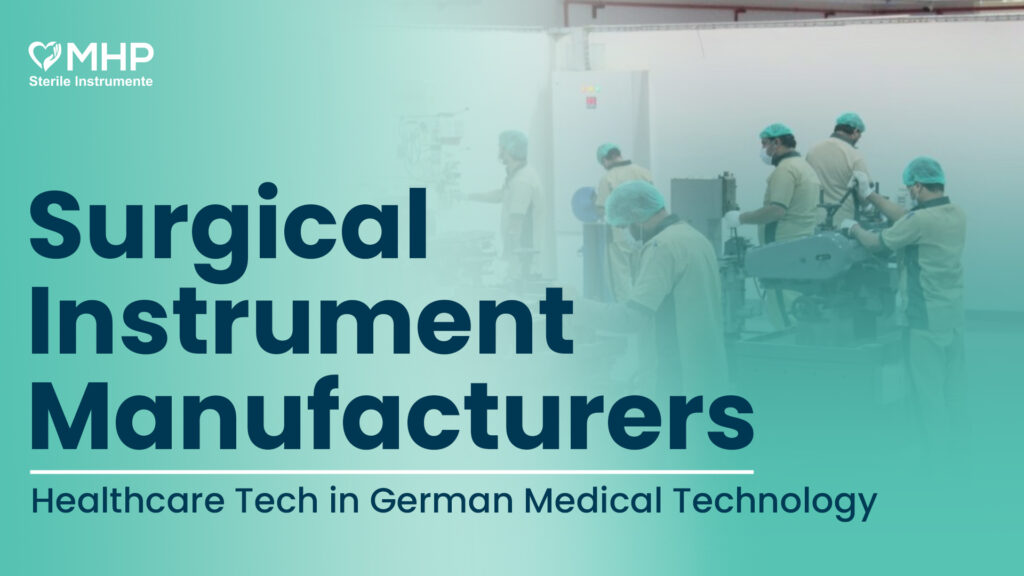
Surgical instrument manufacturers in Germany, including small and medium-sized enterprises, lead the field of healthcare technologies by combining centuries-old craftsmanship with cutting-edge innovation, which is why German-engineered medical instruments are trusted worldwide. MHP Sterile Instrument is the leading manufacturer in Germany. Their commitment to precision manufacturing, rigorous quality control, and compliance with stringent regulatory standards ensures instruments that surgeons rely on for consistent performance and patient safety. German medical technology companies, including small and medium-sized enterprises, invest heavily in research and development, integrating advanced materials, micro-engineering, and digital capabilities such as smart sensors and traceability systems to enhance usability and longevity in the healthcare sector. Strong collaboration between engineers, clinicians, and academic institutions drives continual improvement and rapid translation of clinical needs into practical designs. At the same time, a robust apprenticeship and training culture preserves specialized skills across generations in the healthcare sector, particularly within small and medium-sized enterprises. Additionally, transparent supply chains, comprehensive after-sales support, and a reputation for reliability and durability make German-made surgical instruments from small and medium-sized enterprises the preferred choice in hospitals and clinics worldwide, reinforcing their status as benchmarks for quality in the healthcare sector.
Overview of Surgical Instruments
An overview of surgical instruments highlights the variety, precision, and reliability required in modern healthcare, from scalpels and forceps to specialized laparoscopic tools and implantable device kits; each instrument must meet strict standards for materials, ergonomics, and sterilization to ensure patient safety and optimal surgical outcomes in the German market. German manufacturers, including small and medium-sized enterprises, are often at the forefront of innovation in materials science, manufacturing tolerances, and quality control, which is why German-engineered medical instruments are trusted worldwide for consistent performance, longevity, and regulatory compliance within the healthcare sector. Surgeons and hospitals rely on comprehensive catalogs, clear maintenance protocols, and traceable supply chains so that every instrument functions predictably under high-stakes conditions. The global reputation of German-engineered devices in the medical sector, particularly those from small and medium-sized enterprises, reinforces confidence among clinicians, procurement teams, and regulatory bodies alike.
Types of Surgical Instruments
Surgical instruments come in many types—scalpels and knives for precise incisions, forceps and clamps for grasping and controlling tissue, scissors for cutting, retractors for exposing surgical sites, suction and irrigation tools, needle holders for suturing, and specialized instruments for orthopedics, neurosurgery, ophthalmology and more—and the choice of instrument depends on the procedure, the surgeon’s technique and patient safety requirements; this is one reason why German-engineered medical instruments from small and medium sized enterprises are trusted worldwide, as they combine meticulous design, high-grade materials, rigorous precision manufacturing and consistent quality control to deliver durable, reliable tools that meet the exacting demands of diverse surgical specialties in the global medical market.
Importance in Healthcare
The importance in the healthcare sector of why German-engineered medical instruments are trusted worldwide lies in their consistent combination of precision, durability, and innovation that directly improves patient outcomes; hospitals and clinics rely on these instruments because stringent German engineering standards ensure accurate diagnostics, reliable performance during critical procedures, and long service life, which reduces downtime and total cost of ownership, while ongoing research and adherence to international regulatory requirements foster clinician confidence and global adoption across diverse healthcare systems, including those supported by small and medium sized enterprises.
Trends in Medical Technologies
Trends in healthcare technologies increasingly emphasize precision, reliability and integration with digital systems, which helps explain why German-engineered medical instruments are trusted worldwide: manufacturers combine centuries-old craftsmanship with cutting-edge research and stringent quality controls, producing devices known for durable materials, exacting tolerances and consistent performance in critical clinical settings; additionally, robust regulatory compliance, strong after-sales service networks and ongoing innovation in areas like minimally invasive surgery, robotics and innovative diagnostics reinforce global confidence, encouraging hospitals and clinicians to adopt German-engineered solutions as benchmarks for safety and long-term value in the market in Germany.
Learn more about the recent blog on Surgical Instrument Quality Control: Stainless Steel for Manufacturers.
Leading Manufacturers in Germany
Germany’s leading manufacturers in the healthcare sector have built global trust through relentless precision engineering, rigorous quality control and continuous research and development; their instruments are renowned for durability, innovation and regulatory compliance, reflecting meticulous craftsmanship, advanced materials and strict testing standards that meet international certifications, which together ensure reliable performance in hospitals and clinics worldwide and reinforce why German-engineered medical instruments from small and medium sized enterprises are trusted worldwide.
Top Surgical Instrument Manufacturers
Germany is home to a robust medical device industry where companies in Germany, from German smes to large medical device companies in Germany, combine r&d and close collaboration with research institutions to drive innovation in medical and advancements in medical technologies; this ecosystem—backed by strict medical device regulation and eu medical device regulation (EU MDR)—ensures German surgical instruments are trusted worldwide, with German suppliers and German companies delivering high-tech medical devices, implants and surgical tools, diagnostic devices and digital health solutions that meet the needs of healthcare providers, research institutions and patient care; Germany’s medical device sector leverages industry 4.0, advancements in robotic surgery instruments and advanced technologies to support global distribution, expand the international medical and healthcare market, address an aging population and growing demand for healthcare solutions, and create opportunities for innovation across the healthcare industry, reinforcing Germany’s reputation for commitment to quality and high-quality healthcare in the healthcare market and healthcare infrastructure.
German Medical Device Market Overview
The German medical device market overview highlights why German-engineered medical instruments are trusted worldwide: Germany is home to a robust medical device industry where medtech manufacturers in Germany and German smes drive research and development, producing cutting-edge diagnostic devices, surgical instruments and minimally invasive surgery instruments that set a benchmark for global market adoption; made in Germany quality, German precision and a strong supply chain support global distribution to hospitals worldwide, medical institutions and home care providers, while companies in Germany and German suppliers work closely with research institutions and healthcare providers to translate medical research into new medical technologies and advanced healthcare solutions that address an aging population and rising healthcare spending; guided by a rigorous regulatory framework including eu mdr and eu medical device regulation, Germany’s medical device sector combines focus on innovation, digital health and r&d to create trusted partners for every medical and healthcare system, strengthening the medical device market, German medical technology reputation and Germany’s role as a leading supplier in the global healthcare industry.
Innovation and Engineering Excellence
German-engineered medical instruments are trusted worldwide because Innovation and Engineering Excellence are built into every stage of design and manufacture, delivering unmatched precision, durability, and safety for clinicians and patients alike. Rigorous quality control, advanced materials, continuous R&D, and adherence to stringent regulatory standards ensure consistent performance in operating rooms and clinics worldwide. This commitment to reliability and technical refinement makes German instruments the preferred choice for surgeons, hospitals, and healthcare systems seeking enduring value and superior clinical outcomes.
Quality Standards and Regulatory Framework
Germany’s strict quality standards and comprehensive regulatory framework are central to why German-engineered medical instruments are trusted worldwide; manufacturers adhere to international standards such as ISO 13485 and DIN standards, meet CE marking requirements, and undergo rigorous national oversight from bodies like TÜV and the Federal Institute for Drugs and Medical Devices (BfArM). This layered system enforces robust quality management, documented design controls, full traceability of materials and components, and stringent testing at every production stage, ensuring devices perform reliably in clinical settings. Regular audits, mandatory conformity assessments, and mandatory post-market surveillance further guarantee continued safety and prompt corrective action if issues arise, reinforcing global confidence in German-made instruments for hospitals, clinics, and research facilities.
Regulatory Bodies and Compliance
Regulatory bodies and strict compliance frameworks are central to why German-engineered medical instruments are trusted worldwide: manufacturers in Germany must meet rigorous standards set by the European Medicines Agency, the German Federal Institute for Drugs and Medical Devices (BfArM), and notified bodies that enforce ISO 13485, MDR, and other safety certifications, ensuring consistent product quality, traceability, and post-market surveillance. This regulatory oversight drives a culture of meticulous documentation, third-party testing, and continual improvement, enabling hospitals and clinicians worldwide to rely on German devices for predictable performance, patient safety, and long-term reliability. The visible commitment to compliance, transparent certifications, and adherence to international norms helps explain the global confidence in German-engineered medical instruments within the healthcare sector.
Quality Assurance in Surgical Instrument Manufacturing
Quality assurance in surgical instrument manufacturing is the rigorous backbone that ensures every tool meets exacting performance, safety and longevity requirements, and it explains in part why German-engineered medical instruments are trusted worldwide: manufacturers implement stringent material selection, precision machining, microscopic inspection, and validated sterilization processes, combined with ISO 13485-compliant quality management systems and full traceability from raw material to finished product. Continuous in-process monitoring, statistical process control, and destructive and non-destructive testing verify dimensional accuracy, surface finish, and mechanical properties, while certified cleanroom assembly and final functional testing simulate clinical use to detect even rare defects. Robust supplier qualification, regular internal and external audits, and adherence to international regulatory standards (MDR, FDA, where applicable) reduce variability and ensure repeatable outcomes, and a culture of continuous improvement supported by skilled engineers and technicians closes the loop on corrective actions and design refinements. This integrated QA approach not only minimizes risk to patients and clinicians but also sustains the consistency and reliability that have made German-engineered surgical instruments a global benchmark for trust and performance.
Impact of German Precision on Global Markets
German precision has a profound impact on global markets because the country’s engineering heritage drives consistent quality, rigorous testing, and continual innovation that buyers and healthcare providers rely on; this is particularly evident in medical technology, where meticulous manufacturing processes, strict regulatory compliance, and a tradition of materials excellence explain why German-engineered medical instruments are trusted worldwide, support longer product lifecycles, reduce total cost of ownership for hospitals, and set benchmarks for safety and performance that competitors and partners adopt across borders.
Future of Surgical Instrument Manufacturing
The future of surgical instrument manufacturing will be shaped by advanced materials, automation, and digital integration, underscoring why German-engineered medical instruments are trusted worldwide: meticulous precision engineering, rigorous quality control, and decades of clinical feedback create instruments that meet demanding safety and performance standards; emerging trends such as additive manufacturing, smart sensors, and traceable supply chains promise lighter, more durable tools with real-time monitoring and lifecycle data, while stronger sustainability practices and harmonized global regulations will ensure consistent sterility and compatibility across healthcare systems, reinforcing the global confidence in German design and production as the industry evolves.
Emerging Technologies in Medical Devices
Emerging technologies in medical devices are reshaping patient care with innovations such as miniaturized sensors, AI-driven diagnostics, advanced imaging, and robotics. These breakthroughs underscore why German-engineered medical instruments are trusted worldwide: German design emphasizes precision engineering, rigorous testing, and durable materials that integrate seamlessly with cutting-edge software and connectivity standards. Manufacturers in Germany often lead in translating research into reliable devices—combining decades of clinical feedback with strict regulatory compliance to deliver instruments that clinicians can depend on for accuracy and longevity. As technologies such as telemedicine, 3D-printed implants, and smart wearables become mainstream, the reputation for meticulous craftsmanship and quality assurance associated with German engineering helps hospitals and healthcare providers adopt new tools with confidence, thereby ensuring patient safety and improved clinical outcomes. This alignment of innovation, quality control, and user-focused design explains why German-engineered medical instruments continue to be sought after in global markets as emerging medical technologies evolve.
Focus on Innovation and Sustainability
A focus on innovation and sustainability positions German-engineered medical instruments at the forefront of global healthcare: continual investment in cutting-edge research, precision manufacturing techniques, and eco-conscious materials ensures devices perform reliably while minimizing environmental impact. This commitment to forward-looking design and long-term thinking results in instruments that are not only technologically advanced but also durable, energy-efficient, and compliant with strict safety and regulatory standards. It is this blend of innovation and sustainability that explains why German-engineered medical instruments are trusted worldwide, giving clinicians confidence in clinical outcomes and healthcare systems’ assurance of responsible lifecycle management.
Challenges Facing Manufacturers in Germany
Challenges facing manufacturers in Germany include rising production costs, a shortage of skilled labor, complex regulatory requirements, and increasing global competition, all of which directly impact the medical device sector and the continued reputation for quality that underpins why German-engineered medical instruments are trusted worldwide. High energy prices and stringent environmental regulations raise operating expenses. At the same time, demographic shifts and a competitive labor market make it harder to recruit and retain technicians and engineers with the specialized expertise needed for precision instrument manufacturing. Compliance with evolving EU and international standards demands significant investment in testing, certification, and documentation, lengthening product development cycles and increasing time-to-market. At the same time, global competitors are rapidly adopting advanced manufacturing technologies and cost-competitive strategies, pressuring German firms to modernize production through automation and digitalization without sacrificing the meticulous quality control that defines their instruments. To remain the gold standard, manufacturers must balance these economic and regulatory burdens with continuous innovation, workforce development, and export-oriented strategies that preserve the reliability, safety, and precision that make German-engineered medical instruments trusted worldwide.
For further technical standards and global guidelines on medical instruments, you can explore trusted resources such as the World Health Organization (WHO) and the European Commission’s Medical Devices Regulation (MDR). These organizations provide up-to-date information on safety, compliance, and innovation in healthcare.
You can also explore more educational resources and product insights directly on our website, through pages such as About Us, Our Products, and Contact Us, where we regularly publish updates and technical information on sterile and single-use instruments.