
Surgical Forceps: How to Choose the Right Forceps Type
Choosing the right forceps for surgical procedures is crucial, and understanding the different types of forceps helps clinicians select the appropriate forceps for each case; surgical forceps are essential instruments used to grasp and manipulate tissue, from delicate tissue to tougher structures, and forceps are typically made from stainless steel or titanium, with stainless steel forceps and titanium forceps both offering reusable options and high-quality forceps performance. Forceps come in various shapes and sizes—straight forceps, thumb forceps, hemostatic forceps, dressing forceps, Adson forceps, and specialized forceps such as many types of dental forceps—and are categorized by use so the correct type can be chosen for general surgical or dental procedures. Selecting the right forceps means considering forceps design, tips of these forceps, forceps features such as atraumatic tips, and the shape of the forceps so they provide a secure grip without damaging tissue; forceps are designed to be used to grasp, hold, and manipulate tissue and to control bleeding, so choosing the right surgical forceps is crucial for optimal outcomes. Forceps play a crucial role in surgical workflows, and forceps help surgeons perform precise maneuvers—forceps allow controlled handling and are ideal when precision matters—so exploring the different types and selecting the right tool will guide you to the best forceps for your needs. Whether you need general surgical forceps or different types of dental forceps, understanding how forceps are used, the right forceps for the procedure, and tips for selecting the best forceps ensures that forceps remain essential tools in any surgical tray.
Understanding Surgical Forceps
Understanding forceps involves recognizing the wide variety of designs, sizes and tip configurations that serve specific clinical and surgical tasks; knowing how to choose the right forceps types uses & best practices means evaluating the material, serration pattern, tip shape (straight, curved, toothed, atraumatic), and handle ergonomics to match the procedure and tissue type, from delicate ophthalmic or vascular work to robust general surgery or obstetrics. Proper selection reduces tissue trauma, improves grip and control, and enhances procedural efficiency, while best practices include checking for corrosion, ensuring proper sterilization, testing closure and alignment before use, and selecting the least invasive option that provides adequate hold. Training in technique—correct finger placement, angle of approach, and appropriate force application—combined with routine maintenance and adherence to manufacturer guidance, completes a safe, effective strategy for choosing and using forceps confidently.
What are Forceps?
Forceps are specialized hinged instruments designed to grasp, hold, and manipulate objects, tissues, or materials when fingers are too large or require assistance. Forceps are handheld, hinged tools that function as miniature extensions of human fingers, but with much greater precision and strength. The word “forceps” comes from Latin, meaning “to grasp” or “to seize.” Both the singular and plural forms are “forceps” – there’s actually no such word as a single “forcep”!
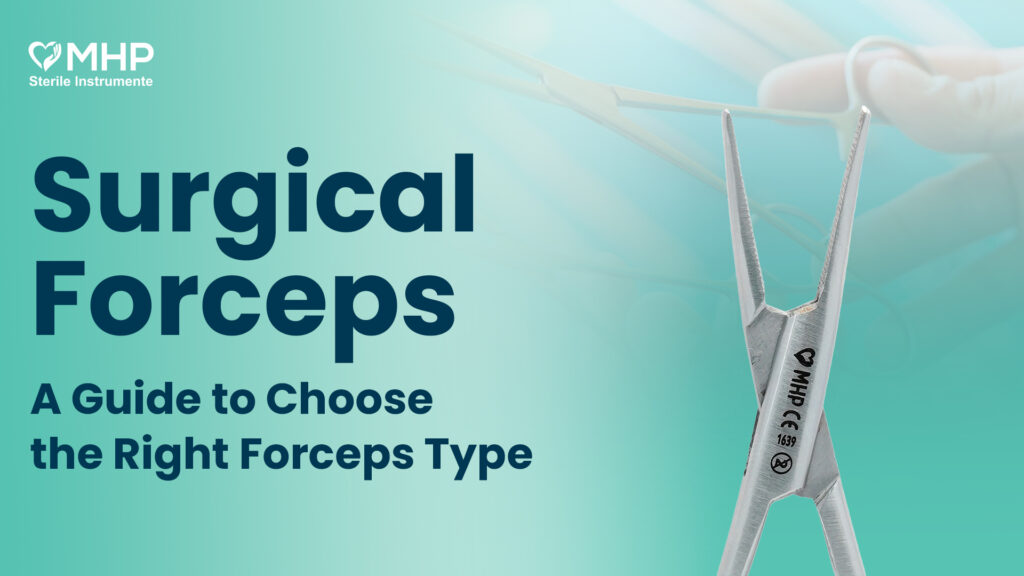
How Forceps are Used in Surgery
Surgical forceps are medical instruments designed to grasp, hold, manipulate, or retract tissues and materials with precision and minimal risk of contamination. These remarkable instruments serve four essential functions in medicine: 1. Grasping and manipulation – holding delicate tissues during examinations or surgeries 2. Clamping – compressing vessels or tissues to control bleeding 3. Hemostasis – specifically stopping blood flow through targeted pressure 4. Extraction – removing objects or assisting in childbirth
Importance of Choosing the Right Forceps
Selecting the correct forceps is essential for precision, safety, and efficiency during any procedure. Understanding the distinctions between forceps, selecting the right type for each situation, and ensuring proper maintenance all play a vital role in achieving safe, effective surgical outcomes. Surgeons make this decision by weighing several key factors. Selecting the perfect forceps for your specific task is a bit like choosing the right dance partner – when you find the right match, everything flows beautifully.
Types of Forceps
Types of forceps vary widely to suit different surgical and clinical needs, and knowing how to choose the right forceps types uses & best practices helps ensure safe, effective procedures: tissue forceps (toothed and atraumatic like Adson and Debakey) are designed for grasping delicate tissue without crushing, hemostatic forceps (Kelly, Mosquito, Crile) clamp vessels to control bleeding, dressing forceps handle sterile materials, needle holders (Mayo-Hegar, Olsen-Hegar) secure suture needles, and specialized forceps such as Allis, Babcock, Kocher, and Russian provide specific grips for organs, tissue retraction, or firm traction; best practice is to select the least traumatic instrument that accomplishes the task, match size and tip design to the tissue and procedure, inspect for alignment and ratchet function before use, maintain sterility, avoid excessive force that causes tissue damage, and follow manufacturer guidance for cleaning and maintenance to preserve precision and longevity.
Surgical Forceps Overview
Surgical forceps are essential instruments in any operating room, designed to grasp, hold, and manipulate tissues, vessels, or surgical materials with precision. They are generally classified into two types: non-ratcheted (thumb) forceps and ratcheted (locking) forceps, each serving a specific role, whether handling delicate tissue or clamping a vessel to control bleeding. Thumb forceps are tissue manipulation without locking. Ring/Locking Forceps are for clamping with a ratchet mechanism. Surgical forceps are medical instruments designed to grasp, hold, manipulate, or retract tissues and materials with precision and minimal risk of contamination—far beyond what fingers alone can achieve.
Learn more about our recent article on Surgical Instrument Quality Control: Stainless Steel for Manufacturers.
Common Types of Surgical Forceps
Biopsy forceps are specialized surgical instruments used to obtain tissue samples for diagnostic examination, usually under a microscope. Ear forceps are specialized instruments used in otolaryngology (ENT) to grasp, hold, and remove objects or material from the ear canal. Hemostatic Forceps (often called hemostats) are surgical instruments primarily used to control bleeding during procedures. Nasal Forceps are specialized surgical instruments used to grasp, remove, or manipulate tissue and foreign bodies in the nasal cavity. Tissue Forceps are surgical instruments shaped like tweezers but more specialized. Dressing Forceps are surgical instruments primarily used for handling dressings, sponges, and other non-living materials during medical procedures. Surgical Towel Clampsare specialized instruments used to secure drapes, towels, or other sterile coverings to the patient’s skin or to each other during surgery. When used specifically to control bleeding, they’re often called hemostatic forceps. Surgical forceps are essential tools in laboratory applications, particularly in medical, biological, and pharmaceutical research.
Specialized Forceps for Delicate Tissue
Ophthalmic Forceps. These are ultra-fine forceps designed for precision, minimal trauma, and excellent control, given that eye tissues are extremely delicate. Plastic surgery forceps are precision instruments for handling delicate tissues in reconstructive and cosmetic procedures, designed to minimize trauma and scarring.
Choosing the Right Surgical Forceps
Choosing the right surgical forceps involves understanding the many types, uses, and best practices to ensure precision, safety, and efficiency during procedures; when learning how to choose the right forceps types uses & best practices, consider material, tip configuration, size, and locking mechanism—stainless steel forceps resist corrosion and withstand sterilization, while titanium variants are lighter and nonmagnetic for delicate or imaging-sensitive work. Match tip shape to the task: straight or curved dressing forceps for handling gauze, toothed tissue forceps for a secure grip on slippery tissue, atraumatic (thumb) forceps such as DeBakey or Adson to minimize tissue injury, and hemostatic forceps such as Kelly or Mosquito to control bleeding. Choose serrated or smooth jaws depending on whether tissue preservation or reliable grasp is the priority, and select an appropriate length and ergonomic design to maintain surgeon comfort and control. Follow best practices by regularly inspecting instruments for wear, using correct sterilization cycles, employing instrument-specific handling techniques, and training staff on selection criteria so that each procedure uses the optimal forceps to reduce complications and improve outcomes.
Factors to Consider When Choosing Forceps
- Tissue Type: Delicate tissue (skin, mucosa, vessels) – fine, atraumatic, or smooth-tipped forceps to avoid tearing. Dense or tough tissue (fascia, cartilage) – toothed or stronger forceps for a secure grip.
- Surgical Goal: Grasping or stabilizing tissue – thumb (non-ratcheted) forceps. Clamping a vessel or controlling bleeding – hemostatic (ratcheted) forceps. Assisting suturing or wound closure – tissue or Adson-type forceps.
- Size and Shape: Forceps vary in length, width, and tip design (curved, straight, serrated, or smooth). Surgeons choose based on the anatomy being accessed and the need for precision vs. strength.
- Procedure Type: Plastic or reconstructive surgery – micro or atraumatic forceps for fine tissue handling. General surgery – versatile, robust forceps suited to multiple tasks. ENT or nasal procedures – long, slender, often curved forceps for confined spaces.
- Surgeon Preference & Experience: Comfort, tactile feedback, and familiarity often guide the final choice. Sterility & Compatibility: The selected forceps must be sterilizable and compatible with the surgical set or the specific instruments being used.
When selecting surgical Adson forceps, consider the following factors:
- Are you handling tissue, applying dressings, or clamping vessels?
- Do you need serrated, toothed, or smooth tips?
- Stainless steel or tungsten carbide reinforced forceps?
Choose based on surgical access and control. If working with highly reactive chemicals, opt for specialized coatings like Teflon or ceramic to prevent contamination and degradation. The material choice makes all the difference in how these tools perform in critical moments. Consider the type of procedure, the type of tissue, instrument size, the angle of access, and pressure control. For hemostasis, the vessel diameter should match your forceps jaw size for optimal control.
Adson Forceps: Features and Uses
Adson forceps are a type of thumb forceps designed for delicate tissue handling. These forceps have fine, serrated tips or teeth that enable a secure grip without damaging soft tissues. Their ergonomic design makes them an essential tool for plastic surgeons, general surgeons, and dental professionals.
Key Features of Adson Forceps:
- Constructed from high-quality stainless steel
- Autoclavable for repeated sterilization and reuse
- Lightweight and ergonomic for easy handling
- Available in multiple tip configurations
- Used for delicate tissue handling, suturing, and dressing applications
Dental Forceps: Types and Applications
Your dentist’s toolkit wouldn’t be complete without dental forceps. These specialized instruments have grips specifically designed for different teeth – molars, premolars, incisors – each with its own extraction challenges. Their handles are designed for leverage, allowing dentists to apply the necessary force while maintaining control.
Best Practices for Using Forceps
Choosing the right forceps types uses & best practices starts with selecting the right surgical forceps for the tissue and procedure: surgical forceps are essential instruments used to grasp and manipulate tissue, and many types of forceps are available so you can choose the best forceps for general surgical, dental forceps or specialized forceps needs; forceps come in various sizes and forceps are specifically designed with features like straight forceps or thumb forceps to provide secure grip and atraumatic tips—forceps with atraumatic edges are ideal for delicate tissue and help reduce trauma. In practice, dressing forceps and hemostatic forceps are used frequently—hemostatic forceps are used to control bleeding, while Adson forceps are ideal for precise handling of skin and fine tissue—so selecting the right surgical forceps and the right tool for each procedure is crucial. Consider forceps design and commonly used material: stainless steel forceps and titanium forceps are durable, reusable forceps that offer corrosion resistance; stainless steel is a common choice due to strength and sterilization ease. Forceps offer versatility: they allow surgeons to hold and firmly manipulate tissue, use them to hold sutures or small objects, and provide stability during suturing; these forceps are essential tools in surgical procedures and play a crucial role in successful outcomes. Understanding the evolution of forceps and exploring the different types of forceps available—from hemostatic to tissue forceps to dental forceps—helps you choose the best forceps, select the appropriate forceps for delicate or heavy-duty tasks, and ensure forceps are used correctly as the right surgical forceps improve efficiency, safety, and patient care.
How to Properly Handle Surgical Forceps
When applying traction with forceps, always pull along the tissue’s natural plane rather than against it. Steady, even force works much better than jerky movements, which can tear tissues unexpectedly. Less is often more – use just enough force to accomplish your task without overhandling. Pencil Grip is recommended for everyone working with thumb forceps, especially when performing delicate tasks. Hold the instrument similar to how you’d hold a pencil: Between your thumb and index finger, with your middle finger providing that essential support underneath. Palm Grip significantly reduces fine control, often leading to excessive pressure on delicate tissues. To operate locking forceps with one hand: Position the rings on your thumb and ring finger, while your index finger acts as both guide and stabilizer.
Maintaining and Sterilizing Forceps
Proper maintenance and sterilization of forceps are essential for patient safety and instrument longevity. Steam sterilization through autoclaving remains the gold standard for reusable forceps. Chemical sterilization methods include ethylene oxide gas, which works at lower temperatures but requires longer processing times, and hydrogen peroxide plasma, which leaves no toxic residues. Always match your forceps to the tissue type – delicate tissues need atraumatic forceps, while tougher tissues can tolerate more robust instruments.
Reusable Forceps: Benefits and Considerations
Yes, most surgical forceps are reusable, but only when properly cleaned, disinfected, and sterilized between uses. They are typically made of stainless steel or other durable metals that can withstand repeated sterilization cycles. Reusable forceps typically offer superior feel and performance with a higher initial cost but lower per-use expense. They’re generally more environmentally sustainable but require proper reprocessing infrastructure to prevent cross-contamination. Reusable forceps are cost-effective in the long run and are typically made from durable materials like stainless steel.
For further technical standards and global guidelines on medical instruments, you can explore trusted resources such as the World Health Organization (WHO) and the European Commission’s Medical Devices Regulation (MDR). These organizations provide up-to-date information on safety, compliance, and innovation in healthcare.
You can also explore more educational resources and product insights directly on our website, through pages such as About Us, Our Products, and Contact Us, where we regularly publish updates and technical information on sterile and single-use instruments.