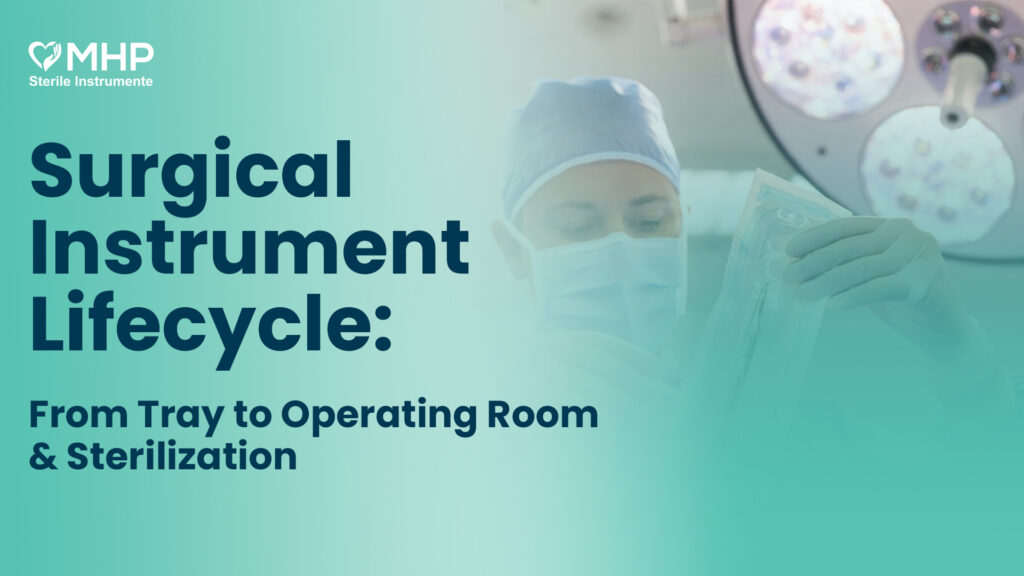
Surgical Instrument Lifecycle: From Tray to Operating Room & Sterilization
Thesurgical instrument lifecycle from production to the operating table begins with design and manufacture of a medical device and continues through distribution, instrument trays assembly, and placement in the operating room where surgeons and healthcare professionals rely on sterile instruments for surgical procedures; reusable surgical instruments must be tracked for instrument usage, weighed against the number of instruments needed per case, and audited in systematic review style to reduce inefficiencies attributable to surgical instrument handling and intraoperative inefficiencies attributable to surgical delays. After use, instruments and instruments like retractors are returned to central sterile processing for disinfection, cleaning to remove bioburden, and steam sterilization in an autoclave as part of instrument sterilization and sterilization cycle protocols designed to sterilize and preserve patient safety while minimizing corrosion and damage to the instruments. Proper reprocess practices, instrument trays management, and measuring intraoperative surgical instrument use—including surgical instrument use with radio-frequency tracking—help reduce contamination, reducing the risk of infection and improving efficiency in operating room instrument handling; audits and adherence to World Health Organization and department of surgery guidelines further standardize sterilization of surgical instruments and support decisions about the environmental impact and life cycle of a surgical instrument, balancing instrument usage, sterilization cycle costs, and the trade-offs between disposable and reusable surgical trays to optimize patient safety and resource use.
Introduction to the Lifecycle of Surgical Instruments
The lifecycle of a surgical instrument from production to the operating table begins with raw steel being shaped into types of instruments and medical instruments that will become reusable surgical instruments or disposable instruments, and each instrument is inspected under global regulatory and medical device regulation standards before distribution to hospitals and clinics; once in the department of surgery, instruments in the operating room are assembled into instrument trays and surgical trays, trays are wrapped and sent through instrument sterilization processes — typically steam sterilization in an autoclave — to sterilize and render instruments sterile, with attention to bioburden, disinfection and preventing corrosion or damage to the instrument during sterilization, because contamination and sterilization failures impact patient safety and the quality and safety of surgical operations.
Measuring intraoperative surgical instrument use and instrument usage, including surgical instrument use with radio-frequency tracking, helps reduce the number of instruments per tray and assess the use of each instrument, measuring instrument use to inform trays to reduce excess and applying lean methodology for improved quality and efficiency in operating, which can lower operating room expenses and reduce environmental impact by minimizing waste from disposable instruments and the environmental footprint across the entire life cycle or life cycle of a surgical instrument. Systematic review and audit of instrument trays, sterilization cycles and reprocess workflows reveal inefficiencies attributable to surgical instrument handling and intraoperative inefficiencies attributable to surgical workflows; assessing the magnitude and costs, including costs of intraoperative inefficiencies attributable to instrument availability and instrument sterilization delays, supports perioperative teams and healthcare professionals and the surgeon in making data-driven decisions to improve instrument handling, reduce the risk of contamination, and promote sustainable surgical practice that balances quality and efficiency in operating with global surgical safety goals advocated by organizations such as the World Health Organization.
Understanding the Surgical Instrument Lifecycle
The operating room is a place of profound purpose and intense focus, where patient safety is paramount. Understanding the surgical instrument lifecycle means tracing the journey of a tool from initial design and material selection through precision manufacturing, quality assurance, sterilization, packaging, distribution and finally use in the operating theatre; this holistic view of the lifecycle of a surgical instrument from production to the operating table also encompasses regulatory compliance, labeling and traceability, staff training, instrument handling during procedures, post‑operative decontamination, inspection, repair and eventual retirement or recycling, all critical steps that ensure instrument performance, patient safety and cost‑effective asset management.
Importance of Sterilization in the Lifecycle
Sterilization is the highest level of decontamination, and its impact on patient safety cannot be overstated. This process renders an instrument free from both viable bacteria, viruses, and spores. Surgical instrument sterilization is nuanced and critical for operational capabilities. By reducing the risk of surgical site infections through meticulous tracking and sterilization validation, the application of lean methodology can significantly improve patient outcomes.
Learn more about our recent article on Surgical Instrument Maintenance: Enhancing Patient Safety.
Overview of Instrument Trays
An overview of instrument trays should follow the lifecycle of a surgical instrument from production to the operating table, describing how instruments are designed and manufactured to meet clinical specifications, packaged and assembled into trays that optimize workflow and sterility, transported to healthcare facilities under controlled conditions, received and stored before use, reprocessed and sterilized according to validated protocols, inspected and maintained to ensure functionality and safety, and finally delivered to the operating room where tray configuration, instrument layout and clear labeling support efficient surgical procedures and patient safety throughout the entire chain of custody.
The Role of Instrument Trays in the Operating Room
Instrument trays are the organizational backbone of the operating room, ensuring that each surgical instrument — from its production in a precision manufacturing facility through sterilization, inspection, packaging, transport, and storage — arrives at the operating table ready for immediate, safe use; well-designed trays protect delicate instruments during transit, maintain sterile configuration during setup, streamline workflow for surgical teams by grouping instruments by procedure and step, reduce turnover time between cases by simplifying count and inventory processes, and support tracking systems that trace an instrument’s lifecycle from manufacturing lot and quality control records to sterilization cycles and maintenance history, all of which together minimize infection risk, prevent instrument damage, and enable efficient, reliable patient care during surgery.
Components of Instrument Trays
The components of instrument trays are selected and arranged with careful attention to the lifecycle of a surgical instrument from production to the operating table, ensuring each instrument travels through manufacturing, sterilization, inspection, and storage without compromise. Typical trays contain a mix of cutting, grasping, retracting, and suturing tools, plus specialized attachments and protective inserts that maintain instrument alignment and prevent damage during transport and sterilization cycles. Material choices, such as stainless steel or titanium for instruments and silicone or thermoplastic for tray inserts, reflect durability and compatibility with repeated high-temperature or chemical sterilization processes used throughout the lifecycle of a surgical instrument from production to the operating table. Proper labeling, instrument counts, and ergonomic layout reduce handling time in sterile processing departments and the operating room, while traceability features like barcodes or RFID tags link each component back to manufacturing and maintenance records, closing the loop on quality control and patient safety.
Preparing Instrument Trays for Surgery
Preparing instrument trays for surgery is a critical step that sits near the end of the lifecycle of a surgical instrument from production to the operating table, ensuring that each instrument is sterile, functional, and organized for efficient use. Technicians inspect instruments for damage or wear that may have occurred during previous use or transport, verify sterilization indicators and packaging integrity, and assemble sets according to the procedure-specific tray list to minimize delays and contamination risk. Proper arrangement and secure fixation of instruments on trays facilitate quick identification and pass, while labeling and documentation tie each instrument back through its tracking history from manufacturer to sterilization cycles and maintenance records. Attention to ergonomics, instrument compatibility, and compliance with hospital and regulatory standards helps preserve instrument lifespan and patient safety, closing the loop in the instrument’s journey from production to the operating table.
Learn more about our recent article on Surgical Instrument Quality Control: Stainless Steel for Manufacturers.
Management of Instrument Trays in the Operating Room
Surgical trays, which contain up to 188 instruments per procedure, incur substantial inefficiencies, as 78–87% of these instruments are often unused. At the Japanese Red Cross Wakayama Medical Center (2019) [22], traceability systems predicted instrument service life, enabling better resource planning and cost savings. Davis Ambulatory Surgical Center (2021) [31] achieved a 40.3% reduction in tray size, resulting in reduced sterilization needs and associated energy consumption.
Steps in the Sterilization Process
Sterilization is the highest level of decontamination. The sterile processing unit must be designed with care to decrease the risk of contamination, reflecting the application of lean methodology in its layout. The general workflow is for instruments to progressively move from more contaminated to less contaminated areas before being stored, ensuring they are effectively sterilized. Following decontamination, instruments are then brought to the assembly area. The sterility of instruments is determined by the sterility assurance level, which is the probability of finding a single microorganism on an instrument after sterilization.
Methods of Sterilization
Steam sterilization is the most common method in developed countries. Radiation for sterilization comes in the form of gamma rays, electron beams, or X-rays. Gamma radiation is ideal for sterilizing biological tissues, including allografts, and ensures that instruments are sterilized to the highest standards. Common container materials include aluminum, double linen wraps, polypropylene, or a sterilization pouch.
Monitoring Sterilization Efficacy
Ideally, the sterilized pans cool for 5 hours in the sterile processing unit. This cooling time allows for moisture to completely migrate out of the packaging. Interestingly, an indicator containing spores of the thermophile, _Geobacillus stearothermophilus_, is used to confirm sufficient autoclave sterilization, a crucial step in the lifecycle of surgical instruments. Indicators may consist of suspensions or test strips and change color to demonstrate a successful or failed sterilization cycle.
Challenges in Sterilization
Challenges in sterilization are a critical concern throughout the lifecycle of a surgical instrument from production to the operating table, beginning with design and material selection where alloys, coatings and intricate jointed or lumen-containing geometries can resist sterilant penetration or degrade under high temperature and humidity; during manufacturing, residual lubricants, machining oils and surface residues must be removed and validated, and during distribution and storage instruments require packaging that maintains sterility while allowing inspection and traceability. In the clinical setting, reprocessing introduces further obstacles: complex or layered instruments harbor blood and tissue that can form biofilms if cleaning is incomplete, sterilization cycles must be validated for each instrument type and load configuration, and incompatible combinations of materials can lead to corrosion, microcracks or loss of sharpness that compromise both sterility and function. Human factors such as inconsistent cleaning protocols, insufficient training, high turnover, and workload pressures increase the risk of breaches, while logistical challenges—tracking instruments across multiple departments, ensuring timely return to service, and deciding between single-use and reusable options—impact both patient safety and cost. Regulatory requirements and documentation for sterility assurance, along with environmental concerns related to energy, water use, and single‑use waste, further complicate sterilization strategies, making an integrated approach to design-for-cleanability, validated processes, staff training, and robust traceability essential to ensure instruments entering the operating table are reliably sterile and functional.
Reprocessing Surgical Instruments
The lifecycle of a surgical instrument from production to the operating table begins with design and manufacturing under strict quality control and regulatory compliance, followed by validation, packaging, and distribution to healthcare facilities; once received, instruments enter inventory systems with traceability and barcoding, undergo cleaning and decontamination, detailed inspection and functional testing, and routine maintenance and repair as needed, then are packaged for sterilization with biological and chemical indicators to confirm a validated sterilization cycle, stored under sterile conditions, transported to the operating room while preserving the sterile field, used during procedures, and finally tracked for resterilization or end-of-life disposal in accordance with safety and environmental protocols.
Definition and Importance of Reprocessing
Modern decontamination defines cleaning, disinfection, and sterilization as technical terms. Cleaning removes foreign material, allowing for better surface contact and reducing the risk of chemical inactivation. Disinfection involves destroying or removing microorganisms, which is a crucial step in the lifecycle of instruments often used in surgical procedures. Sterilization is the highest level of decontamination.
Best Practices for Reprocessing Instruments
Instruments must be grossly cleaned by the scrub technician to remove blood, tissue, and other material, as the impact of sterilization depends on thorough cleaning. Prompt cleaning to reduce contact time with blood, and using sterile water rather than saline, decrease the risk of instrument corrosion. Another important step that can be overlooked is the use of an enzymatic transport gel or foam. Technicians will inspect instruments to ensure functionality, lack of corrosion, and absence of gross contamination. They will then replace missing instruments to ensure that pans are complete.
Impact of Reprocessing on Instrument Lifecycle
The lifespan of an instrument is estimated at 300–900 cycles of sterilization. As a result, it is difficult for surgeons to identify faulty instruments until they are attempted to be used in the operating room. Sterilization and cleaning cycles, maintenance records, and usage data are important parts of tracking instrument use.
Conclusion: Ensuring Quality in the Lifecycle of Surgical Instruments
Ensuring quality in the lifecycle of a surgical instrument from production to the operating table requires rigorous manufacturing standards, incoming material inspection, validated sterilization and decontamination processes, secure packaging and labeling, and robust traceability through lot tracking and inventory management; procurement and distribution channels must comply with regulatory requirements and risk management policies, while ongoing maintenance, routine performance checks, shelf-life monitoring and reprocessing protocols preserve functionality and patient safety, and end-of-life disposal or recycling completes a controlled supply chain that supports continuous quality control and clinical efficacy.
Future Trends in Surgical Instrument Lifecycle Management
New technologies, such as the application of radiofrequency tags to instruments, are being developed to enhance institutional capabilities for tracking instrument use and sterilization, potentially impacting the magnitude and costs of intraoperative procedures. Reducing unnecessary sterilization of surgical instruments would extend their lifespan and lower sterilization costs. A significant investment in artificial intelligence and computer vision is required to achieve robust instrument identification with omnidirectional marking recognition. The creation of public databases rich in information on surgical instruments and maintenance and sterilization details has become necessary. The future lies in greater automation integration to minimize human error and improve ergonomics for healthcare workers, especially in the operating room, where surgical instruments are used.
Key Takeaways for Healthcare Professionals
The quality of the instrument directly affects patient safety and surgical outcomes, underscoring the importance of ensuring instruments are properly sterilized. With approximately 310 million major surgeries conducted worldwide each year—including 40 to 50 million in the United States and around 20 million in Europe [37]—enhancing surgical instrument traceability systems is crucial to ensuring patient safety and optimizing operational efficiency.
Final Thoughts on Sterilization and Safety
By reducing the risk of surgical site infections through meticulous tracking and sterilization validation. There are numerous steps and interesting scientific principles that reduce bioburden, allowing surgeons to operate without a significant risk of disease transmission to patients through contaminated instruments.
For additional technical standards and global guidelines for medical instruments, consult trusted sources such as the World Health Organization (WHO) and the European Commission’s Medical Devices Regulation (MDR). These organizations provide up-to-date information on safety, compliance, and innovation in healthcare.
You can also explore more educational resources and product insights directly on our website, through pages such as About Us, Our Products, and Contact Us, where we regularly publish updates and technical information on sterile and single-use instruments.