Surgical Instrument Quality Check & Assurance Essentials
Inside quality check how sterile instruments are tested involves a robust quality check program in sterile processing that combines visual inspection, functional testing to ensure proper operation, and validation of the sterilization process using test packs and process indicators to document sterilization cycles in sterilization records; sterile techniques — from steam sterilization to plasma or other sterilization methods — follow MHP Sterile Instrument guideline for disinfection and sterilization and regulatory requirements to provide sterility assurance for medical devices and surgical instruments such as forceps, laparoscopic instruments and other complex instruments, reducing contamination and the risk of surgical site infections and surgical complications in the operating room; quality assurance and continuous quality improvement are achieved through traceability, accurate and reliable sterilization parameters, advanced inspection and validation, adherence to quality standards and Joint Commission expectations, collaboration between instrument manufacturing and healthcare institutions to ensure that instruments are produced, reprocess and maintained at an appropriate level of maintenance, and strong instrument management practices across healthcare settings to improve healthcare quality, patient safety and modern healthcare delivery.
Understanding Surgical Instrument Quality Check
Inside quality check how sterile instruments are tested involves a comprehensive sterility assurance program that includes visual inspection, functional testing, leak testing and validation of cleaning and sterilization processes; chemical indicators and biological indicators are routinely used to verify cycle effectiveness, while process control measures and documentation ensure compliance with ISO standards and regulatory requirements, providing traceability and continual improvement in instrument safety and performance.
Definition and Importance of Quality Check
Surgical instruments are critical tools that surgeons rely on for effective, safe, and precise surgical procedures. Quality Check (QC) helps ensure that only top-quality, surgery-grade instruments get manufactured and delivered to healthcare providers. It helps manufacturers maintain stringent standards of precision, reliability, and safety in the production, sterilization, and packaging of instruments. This process involves rigorous testing and evaluation throughout the production cycle, from material sourcing to packaging. This way, manufacturers ensure that each instrument adheres to stringent regulatory requirements and predefined specifications. Quality checks of surgical instruments are a key factor in ensuring their safety and efficiency, thereby guaranteeing patient safety and well-being. Quality control in surgical instrumentation is important for several reasons, including ensuring patient safety and that instruments are safe to be used, reducing the risk of complications or infections during surgical procedures. It helps maintain consistency in instrument performance, allowing healthcare professionals to rely on their functionality without doubt. It protects the reputation of healthcare facilities by demonstrating their commitment to excellence and patient safety.
Quality Assurance vs. Quality Checks
Quality checks in instrument production begin at the design and development stage and continue throughout the production lifecycle until the product is packaged. In quality checks, how sterile instruments are tested follows strict standards that begin with sorting sharp instruments from contaminated ones, followed by validation of sterilizer cycles and biological indicators; this process reflects advances in medical instrumentation and supports consistent patient care by ensuring every tray meets sterility requirements before use.
Regulatory Compliance in Surgical Instruments
Regulatory compliance in surgical instruments encompasses rigorous processes and documentation to ensure patient safety, and understanding inside quality control how sterile instruments are tested is central to meeting those requirements; manufacturers and healthcare facilities must follow standards such as ISO 13485 and FDA guidance by validating sterilization methods, performing routine biological and chemical indicator testing, monitoring sterilizer cycles and environmental parameters, and maintaining traceability and device history records; audits, corrective action plans, and regular staff training further demonstrate conformity, while risk assessments, design controls, and post-market surveillance confirm that sterilization processes remain effective and that instruments released for use consistently meet validated sterility specifications.
Best Practices for Sterilization of Surgical Instruments
Best Practices for Sterilization of Surgical Instruments include a robust inside quality checks program that starts with strict cleaning and visual inspection, continues through validated sterilization cycles, and ends with documented biological, chemical, and physical indicators to confirm sterility. Inside quality checks, how sterile instruments are tested typically involves routine use of biological indicators (spore tests) to verify autoclave performance, chemical integrators and external process indicators to show exposure to sterilization conditions, Bowie-Dick tests for steam penetration, and physical monitoring of time, temperature, and pressure parameters. Additional assays such as protein residue tests, ATP bioluminescence, and periodic microbial culturing provide supplementary assurance, while regular preventive maintenance, load control procedures, environmental monitoring of sterilization areas, staff competency training, and detailed record-keeping ensure consistent results and traceability for each instrument load.
Learn more about our recent article on Surgical Instrument Quality Control: Stainless Steel for Manufacturers.
Overview of Sterilization Methods
Overview of sterilization methods in modern healthcare describes how surgical instruments and complex instruments are processed through steam sterilization, plasma, and other sterilization methods to sterilize and validate sterility as part of quality assurance and quality control in surgical instrument management; robust quality control measures including visual inspection, functional testing to ensure instrument performance, test pack monitoring, sterilization cycle validation, sterilization parameters, and sterilizer maintenance are essential to reduce the risk of contamination, surgical site infections, and surgical complications, and to ensure patient safety in operating room and other healthcare settings. Healthcare facilities and healthcare institutions follow guidelines for disinfection and sterilization, MHP Sterile Instrument standards, Joint Commission, and regulatory requirements to document sterilization records, process indicators, traceability, and sterility assurance so that instruments are produced, reprocessed, and contaminated instruments are appropriately reprocessed, and comply with regulatory compliance and quality control standards. Integration of advanced inspection, continuous quality improvement, infection control, and sterilization quality within sterile processing teams supports infection prevention, accurate and reliable functional testing, appropriate disinfection and sterilization in healthcare, and ongoing advancement of medical instrumentation and healthcare quality to protect patients and healthcare professionals during surgical procedures and patient care.
Key Factors in Sterilization Quality
Key factors in sterilization quality include validated sterilization processes, routine monitoring, and strict controls on packaging and handling to ensure instruments remain sterile until use; inside quality control how sterile instruments are tested relies on a combination of mechanical monitoring of cycle parameters (time, temperature, pressure), chemical indicators that change color when critical conditions are met, and biological indicators that use resistant microorganisms to confirm microbial kill, all supported by clear loading protocols, regular equipment maintenance and calibration, environmental controls in sterilization and storage areas, comprehensive documentation and traceability for each load, staff training and competency assessments, and periodic internal and external audits with defined corrective actions when deviations are detected.
Common Sterilizing Practices and Their Effectiveness
Proper disinfection and sterilization in healthcare facilities are essential for preventing the spread of infections among patients, whether the procedure is delicate or minor. Common sterilizing practices and their effectiveness are critical to patient safety and include autoclaving (steam under pressure), ethylene oxide gas, hydrogen peroxide plasma, and dry heat; each method has specific parameters—temperature, pressure, duration, and humidity—that determine kill rates for bacteria, spores, and viruses. Inside quality control, how sterile instruments are tested involves biological indicators (spore strips or vials) to confirm microbial inactivation, chemical indicators that change color when exposure parameters are met, and physical monitoring of sterilizer cycles through printouts or electronic records of time, temperature, and pressure. Additionally, routine process indicators such as Bowie-Dick tests for steam penetration, routine maintenance and calibration, and load-release protocols ensure that instruments are not only processed but also remain intact and functional after sterilization. Validation and routine monitoring together establish that the chosen sterilization practice is effective for the instrument type and load configuration, and documented corrective actions are required when indicators fail, making the combination of method selection and inside quality control, how sterile instruments are tested, essential to effective infection control programs.
Inspection Processes for Surgical Instruments
How sterile instruments are tested begins with strict quality control in sterile processing: instruments are received, reprocessed and subjected to visual inspection and functional testing to ensure patient safety and sterility assurance; technicians check for defects, sharp instruments or contaminated instruments and validate cleaning before loading test packs into a sterilizer for steam sterilization, plasma or other sterilization methods, monitoring sterilization parameters and the sterilization cycle with process indicators and recording sterilization records for traceability and regulatory compliance. Healthcare facilities follow MHP Sterile Instrument guidance and Joint Commission standards and implement quality assurance and continuous quality improvement to reduce the risk of surgical site infections and surgical complications, using advanced inspection, validation of sterilization processes, and adherence to guideline for disinfection and sterilization in healthcare to ensure that instruments — from forceps and laparoscopic instruments to complex instrumentation and medical devices — meet quality control standards. Robust quality control measures, including sterility testing, sterility assurance, functional testing to ensure performance during surgical procedures, and documentation required by healthcare institutions, support infection control, improve healthcare quality, and protect patients in modern healthcare and operating room environments while aligning with regulatory requirements and best practices in instrument management and the advancement of medical instrumentation.
Learn more about our recent article on Surgical Instrument Maintenance: Enhancing Patient Safety.
Visual Inspection Techniques
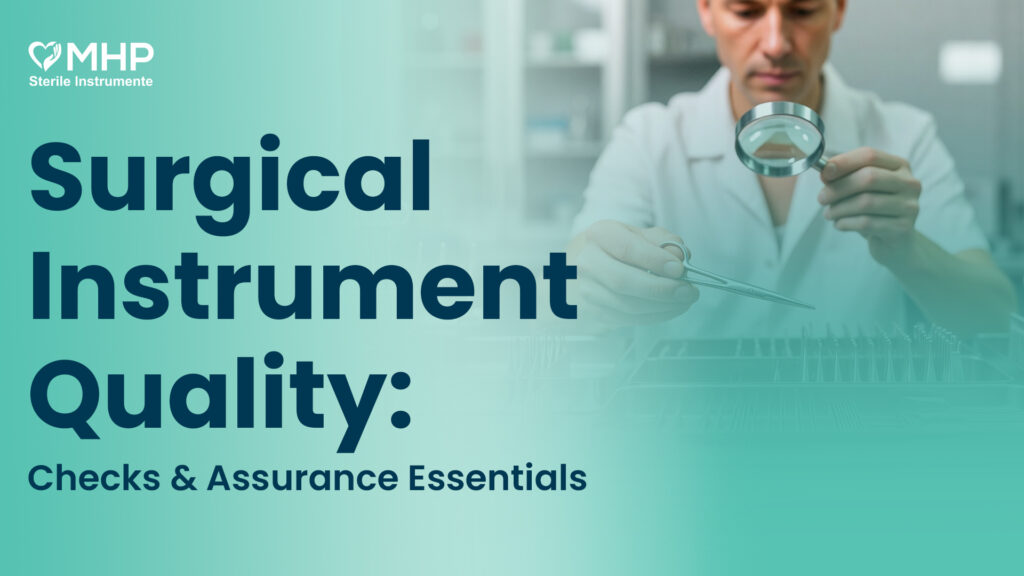
Visual inspection helps identify irregularities, surface defects, and imperfections that compromise the instrument’s safety or functionality. Using magnification devices with 2x to 10x power, inspectors can detect microscopic damage, corrosion, and contamination that would be invisible to the naked eye. Modern inspection stations often incorporate LED lighting systems that provide consistent, shadow-free illumination. This technology helps inspectors identify surface irregularities, pitting, and other defects that could compromise instrument performance or patient safety.
Functional Testing: Ensuring Instrument Performance
Functional testing processes test and validate aspects such as sharpness, alignment, grasping edges, structural integrity, and so on. * Scissors cut test using surgical drape or suture thread, clamps checked for jaw grip, lock function, and alignment, and needle holders tested for needle grip and jaw closure.
Advanced Inspection Technologies
Quality Visual Inspection (QVI) represents a significant advancement in surgical instrument inspection technology. Using advanced borescope systems like the MOLE Borescope Medical Inspection Camera, inspectors can examine the internal components of complex instruments such as laparoscopic devices, endoscopes, and other hollow instruments. QVI technology has proven to reduce instrument failures by up to 85% compared to traditional inspection methods. The digital imaging capabilities enable detailed documentation of inspection results, creating a comprehensive audit trail for regulatory compliance and quality assurance. The latest generation of inspection systems incorporates artificial intelligence and machine learning algorithms to automate the detection of common defects. These systems can process large volumes of instruments quickly while maintaining high accuracy rates. CMM Machines (Coordinate Measuring Machines) offer high-precision 3D measurements of complex components and ensure tools match technical drawings to the micron. Camera-Based Inspection Systems are non-contact systems that provide detailed imaging of part geometry, tolerance comparisons, and automated reports and deviation flags.
Infection Checks and Quality Assurance
Infection Checks and quality assurance programs ensure patient safety by implementing robust inside quality control how sterile instruments are tested processes that combine routine monitoring, validation and documentation; sterile instruments are inspected visually for cleanliness and integrity, processed according to validated sterilization cycles, and then assessed with chemical indicators that change color to confirm exposure to the sterilization parameters, mechanical and electronic readouts of sterilizers are checked for temperature, pressure and time consistency, and biological indicators containing resistant spores are regularly incubated to verify actual microbial kill; additional measures such as ATP bioluminescence testing for residual organic matter, periodic sterility testing, strict instrument tracking, staff competency assessments, calibrated test equipment and detailed record-keeping complete a multilayered quality assurance approach that detects failures early and maintains regulatory compliance.
Role of Quality Control in Infection Prevention
Effective QC processes help minimize this risk by ensuring instruments are properly sterilized, meticulously inspected for cleanliness, and free of any potential pathogens. Role of Quality Control in Infection Prevention: Inside quality control, how sterile instruments are tested lies a systematic set of procedures that directly reduces the risk of healthcare-associated infections by verifying sterilization efficacy, equipment integrity, and process consistency. Quality control programs combine biological indicators (e.g., spore tests), chemical indicators, integrator strips, and physical monitoring of sterilizer parameters (time, temperature, pressure) to confirm cycles reach validated endpoints; they also use routine Bowie-Dick tests for steam penetration, ATP or protein residue tests for cleanliness, and periodic preventive maintenance and calibration of sterilization equipment. Effective QC includes standardized cleaning and decontamination protocols, clear instrument tracking and traceability, staff competency assessments, documented acceptance criteria and corrective actions, and regular internal and external audits to detect deviations early. By validating instrument processing, maintaining records for traceability, and continuously improving processes through root cause analysis when failures occur, quality control ensures that sterile instruments delivered to clinical areas are safe, thereby playing a central role in infection prevention and patient safety.
Traceability and Its Importance in Infection Checks
QC systems also continuously document and label products to ensure they are easily traceable. Traceability is a cornerstone of infection control because it documents inside quality control how sterile instruments are tested and ensures sterilization validation can be verified after each cycle; by recording lot numbers, load control data and chain of custody, facilities create an auditable trail that links chemical indicators, biological indicators and ATP testing results to specific sterilizer monitoring records and routine testing schedules, so any breach can be quickly identified, recalled and corrected while supporting continuous quality improvement and regulatory compliance.
Continuous Improvement in Sterilization and Inspection
The importance of quality control in surgery underscores that nonstop improvement is essential to adapt to new technologies, regulations, and best practices. By continuously evaluating and refining quality control processes, healthcare facilities can stay ahead of emerging risks and challenges, foster innovation and efficiency, and, by default, lead to better outcomes for patients and healthcare providers alike. Effective inspection programs include regular quality control measures and continuous improvement processes. Regular audits of inspection procedures, inter-rater reliability testing, and analysis of inspection data help identify areas for improvement and ensure consistent quality across all inspection activities.
For further technical standards and global guidelines on medical instruments, you can explore trusted resources such as the World Health Organization (WHO) and the European Commission’s Medical Devices Regulation (MDR). These organizations provide up-to-date information on safety, compliance, and innovation in healthcare.
You can also explore more educational resources and product insights directly on our website, through pages such as About Us, Our Products, and Contact Us, where we regularly publish updates and technical information on sterile and single-use instruments.