Surgical Instruments Every Operating Room Needs: Top Essentials
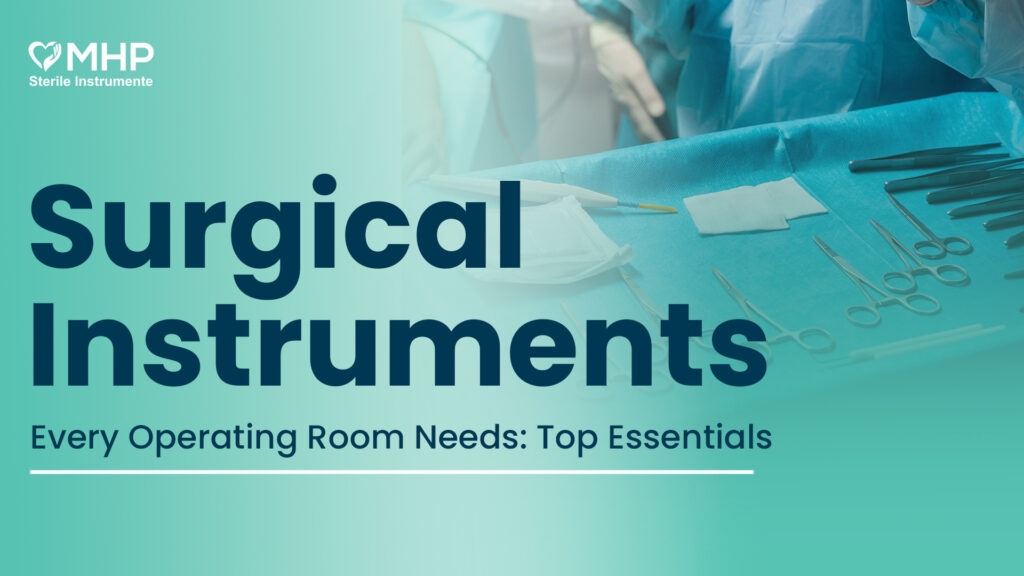
For every surgical procedure and successful surgical outcome, a well-prepared instrument set is essential: top 10 surgical instruments every operating room should stock include scalpel blades and handles, needle holders and tapered surgical needles for precise sutures, surgical scissors such as mayo scissors and metzenbaum scissors for delicate tissue handling, forceps and tissue forceps, hemostatic forceps and clamp-like instruments to control blood vessels, surgical retractors and surgical hooks to keep the surgical field and provide a clear view of the surgical site, surgical probes and suction devices to remove debris from the surgical area, surgical staplers and surgical rongeurs for specialized tasks, plus high-quality surgical drapes and an organized instrument set to maintain a clear surgical field and surgical efficiency; using best quality surgical instruments from reputable surgical instrument manufacturers and suppliers, and keeping surgical instruments cleaned and maintained, helps the surgical team deliver safe surgical care across general surgery and other specialties, improving surgical practice and making instruments critical to every surgery.
Introduction to Surgical Instruments
Introduction to Surgical Instruments: In every operating room, a comprehensive instrument set featuring the top 10 essential surgical instruments every operating room must have in 2026 ensures successful surgical procedures and improved surgical outcomes; these must-have instruments and high-quality instruments — from surgical scalpels and needle holders to surgical retractors, hemostatic forceps and tissue forceps — are critical for achieving precision during incision, controlling blood vessels, maintaining a clear view of the surgical field and protecting delicate tissue, while surgical drills and saws and rongeurs support orthopedic and general surgery needs; choosing reliable surgical instruments and surgical instruments suppliers who provide best quality surgical instruments and instruments made to specification enables the surgical team to maintain the surgical site and instruments and maintaining sterility, and purchasing surgical instruments online or from reputable surgical instrument manufacturers simplifies access to standard surgical instruments like mayo scissors and metzenbaum scissors, clamps and forceps that are used across categories of surgical instruments, ensuring that instruments help the surgical practice deliver consistent surgical efficiency, safer surgical procedures and a clearer surgical area for the team to perform every surgical procedure with confidence.
Importance of Surgical Instruments in Surgery
– Surgical instruments are the necessary weapons for every surgical field. – Surgeons require high-grade operating room instruments that they can rely on. – The proper surgical instruments must be in place to execute a successful procedure. – Every instrument is crucial for the work of a surgeon and ensures that the patient’s result is going to be safe. – Ensuring the success of operations heavily depends on the availability of precise and reliable surgical instruments. – Every tool plays a unique role, contributing to the surgeon’s ability to deliver optimal patient outcomes.
Overview of Operating Rooms
An overview of operating rooms highlights the critical environment where patient safety, sterilization protocols, advanced technology, and team coordination converge to ensure successful surgical outcomes; in 2025, the modern operating room must be equipped not only with robust HVAC systems, surgical lighting, and integrated imaging, but also with the top 10 essential surgical instruments every operating room must have in 2025—precision scalpels and blades, versatile forceps and clamps, fine-tipped scissors, reliable needle holders, high-quality retractors, suction and irrigation devices, staplers and ligation tools, electrosurgical units and compatible instruments, specialized laparoscopic instruments, and durable instrument trays and sterilization containers—to support a wide range of procedures, minimize infection risk, improve procedural efficiency, and accommodate evolving minimally invasive and robotic techniques while ensuring ergonomic design and ease of sterilization for surgical teams working under pressure.
Learn more about our recent article on Surgical Instrument Quality Control: Stainless Steel for Manufacturers.
Categories of Surgical Instruments
– Every operating room has a categorical alignment of surgical instruments. – There are three broad categories of surgical instruments: instruments for cutting, instruments for grasping, and instruments for holding. – Surgical Tools for Cutting: Every operating room should have cutting tools for incising and notching, such as blades, saws, surgical razors, and scissors. – Operating Room Instruments for Grasping are used for grasping organs, tissues, and different surgical materials; surgeons typically use clamps and tissue forceps for these functions. – Basic Surgical Instruments for Holding: This category encompasses different tools like hooks, retractors, and needle holders.
Top 10 Must-Have Surgical Instruments for Every Operating Room
Top 10 Must-Have Surgical Instruments for Every Operating Room should include essential surgical instruments such as a scalpel, surgical scissors like mayo scissors and metzenbaum scissors, forceps and tissue forceps, needle holders, hemostatic forceps and clamps to control blood vessels, plus surgical retractors and surgical hooks to maintain a clear view of the surgical field; these instruments every surgical team relies on combine precision and reliability to improve surgical outcomes during any surgical procedure, whether general surgery or specialized cases, and form a basic instrument set that surgical instrument manufacturers and suppliers recommend as high-quality, must-have surgical instruments for every operating room to ensure successful surgical practice and efficient workflow with instruments used for incision, suture, blunt and delicate tissue handling, and retraction, while additional categories like surgical rongeurs, surgical drills and saws, and surgical probes expand the types of surgical instruments available so the surgical team has instruments that every operation may require and instruments are used to create a safe surgical site and optimal surgical efficiency.
Surgical Scissors
Surgical scissors assist in incising complete organs or cutting through frail internal structures.
- Mayo scissors are usually heavy-duty scissors used to cut thick tissues and sutures.
- Metzenbaum scissors are primarily used in delicate heart surgeries to notate lighter tissues. –
- Iris scissors are the most precise as they help to cut fine sutures and organs.
Surgical scissors are versatile instruments used to cut tissue, sutures, and other materials during operations. They come in a variety of designs to suit specific tasks. Mayo Scissors are designed for cutting thick tissues such as fascia. Metzenbaum Scissors are Ideal for delicate tissue dissection. – Operating Scissors are used for cutting sutures and gauze.
Scalpel
Surgical scalpels are precise instruments used to make incisions in a surgical setting. These are used to make incisions in the skin and soft tissues to facilitate operations carefully. Most surgical scalpels come with varying blade sizes, such as size 10, size 11, and size 15, which are used for large incisions, sharply angled cuts, and finer notches, respectively. Surgical scalpels facilitate the field by making notches and incisions in various tissues and organs. Scalpels come with blades of different sizes and configurations and can either be disposable or reusable. Every surgical field has blades of sizes 10, 11, and 15 available. These blades are used for incising large tissues, making angled notches, and drawing fine cuts, respectively. The scalpel is among the earliest and most basic instruments used in surgery. The blade is exceptionally sharp, allowing a surgeon to make a very precise incision. The scalpel is one of the most iconic and essential tools in any operating room. This small, sharp instrument is primarily used for making incisions in skin and soft tissue.
Surgical Forceps
Surgical forceps are well-structured grasping instruments that assist in securing tissues or organs. Tissue Forceps are non-serrated and specialized for gripping delicate tissues during operation or dissection. Bonney Forceps are heavy-duty and designed to cast a firm grip on thick tissues. Adson Forceps are serrated to hold thick tissue. Surgical forceps have a tweezer-like construction and are used either to hold tissue or to pick up foreign objects from the surgical site. Tissue Forceps help grasp and hold tissue during surgical manipulation. Bonney Forceps are used to hold sturdy tissues. Adson Forceps are designed for holding thicker tissues and organs. Forceps are a versatile instrument used for grasping, holding, and manipulating tissue and other materials. Forceps are essential for gripping, holding, or manipulating tissues and objects during surgery.
Suture Materials
Suture materials are a fundamental component of the top 10 essential surgical instruments every operating room must have in 2026, providing reliable wound closure, minimizing infection risk, and promoting optimal healing; modern sutures include absorbable and nonabsorbable options made from materials such as polyglycolic acid, polydioxanone, polypropylene, and silk, along with advanced antimicrobial-coated and barbed sutures that reduce knot-tying time and improve tissue approximation, and selecting the correct size, tensile strength, needle type, and resorption profile is critical for different tissues and procedures, while sterile, single-use packaging and clear labeling ensure readiness and compliance with evolving OR safety standards for 2026.
Surgical Drills and Saws
During surgeries that require cutting hard bones and skulls, surgical drills and saws come in handy. These surgical instruments are kept lightweight to assist the surgeon during prolonged surgery hours. To maximize patient safety, they operate at an optimized speed level and can be very precise to ensure streamlining. – Orthopaedic and neurosurgeries require cutting the skull, bones, and hard tissues. – Drills and saws are made lightweight, with an efficient handling mechanism.
Precision Surgical Instruments
Precision Surgical Instruments are the cornerstone of safe, efficient operations and firmly belong on any list of the top 10 essential surgical instruments every operating room must have in 2026; crafted from medical-grade stainless steel or titanium and engineered for exacting tolerances, these instruments deliver reliable performance for delicate dissections, suturing, and hemostasis, reduce trauma to tissues, and support faster patient recovery. In 2026, precision tools must also meet rising expectations for ergonomic design to reduce surgeon fatigue, corrosion-resistant finishes for repeated sterilization cycles, modular compatibility with minimally invasive and robotic platforms, and traceability for inventory and compliance. Investing in high-quality precision instruments enhances procedural accuracy, lowers the risk of complications, and ensures that operating rooms are equipped to handle an increasingly complex surgical caseload with confidence and efficiency.
Common Surgical Instruments Used in Surgery
Standard surgical instruments used in surgery form the backbone of every operating room, and the top 10 essential surgical instruments every operating room must have in 2026 include scalpels, forceps, needle holders and a range of surgical clamps to control blood vessels and maintain a clear surgical field; these must-have surgical instruments and basic surgical instruments made to exacting standards — such as mayo scissors, metzenbaum scissors, hemostatic forceps and tissue forceps — help the surgical team achieve precision during incision, suturing and delicate tissue handling. Reliable surgical equipment, like surgical retractors, surgical probes, and surgical drapes, creates a safe surgical site and improves surgical efficiency. In contrast, surgical rongeurs, surgical hooks, and surgical drills and saws expand the instrument set for specialty procedures. Whether reviewing surgical instrument categories or selecting high-quality instruments from surgical instrument manufacturers and suppliers, investing in quality instruments and essential surgical tools ensures successful surgical outcomes and supports standard surgical practice across operating rooms worldwide.
Overview of Common Instruments
Surgeons demand a ready supply of standard surgical instruments at all times. Each surgical tool performs a specific function, ensuring streamlined operations and surgeries. Working without these instruments is almost impossible. Before starting the surgery, technicians prepare the field by equipping the surgical kit with all the required surgical tools.
Unique Functions of Each Instrument
Each instrument in the top 10 essential surgical instruments every operating room must have in 2026 serves a distinct and indispensable role: scalpels provide precise incisions and tissue dissection, forceps grasp and manipulate delicate structures, scissors cut tissues and sutures with controlled accuracy, retractors maintain optimal exposure of the operative field, needle holders secure sutures during closure, suction devices remove blood and fluids to preserve visibility, electrocautery tools coagulate vessels and minimize bleeding, clamps control vascular flow and stabilize tissues, laparoscopic trocars enable minimally invasive access and instrument passage, and surgical staplers offer rapid, reliable tissue approximation and hemostasis—together these instruments form a comprehensive toolkit that enhances efficiency, safety, and outcomes across a broad range of modern surgical procedures.
Maintenance of Surgical Instruments
Maintenance of surgical instruments is a critical component of patient safety and cost-effective operating room management, and it directly affects the performance and longevity of the top 10 essential surgical instruments every operating room must have in 2026; routine inspection, meticulous cleaning, proper sterilization, timely lubrication of hinges and ratchets, and careful storage in trays or protective cases prevent corrosion, dulling, and mechanical failure that could compromise procedures. A robust maintenance program includes documented decontamination workflows, use of instrument-specific cleaning solutions and ultrasonic baths, scheduled preventive maintenance and calibration for powered devices, and immediate repair or retirement of damaged items to reduce intraoperative risks. Training sterile processing personnel in instrument identification, proper disassembly and reassembly, and updated manufacturer guidelines ensures that high-value items on the top-10 list—such as advanced electrosurgical instruments or precision retractors—remain reliable. Additionally, implementing tracking systems and inventory controls helps maintain availability, supports compliance with regulatory standards, and informs procurement decisions, so operating rooms can confidently rely on their essential instruments throughout 2026 and beyond.
Conclusion: Essential Surgical Instruments for Every Operating Room
Conclusion: As hospitals update protocols and technology for 2026, the top 10 essential surgical instruments every operating room must have in 2026 remain foundational to safe, efficient care; surgical instruments that every OR team relies on include forceps, retractors, scalpels, needle holders, and suction devices, while surgical scissors come in multiple varieties to meet delicate and heavy-duty needs, and instruments are critical not only for routine procedures but also for emergency readiness and advanced minimally invasive surgery.
Recap of Top 10 Surgical Instruments
Recap of Top 10 Surgical Instruments: As healthcare advances and procedures grow more complex, the top 10 essential surgical instruments every operating room must have in 2025 represent a carefully selected set of tools that ensure safety, precision, and efficiency—from high-quality scalpels and electrosurgical devices to adaptable forceps, needle holders, suction systems, retractors, hemostats, advanced laparoscopic instruments, sterilizable endoscopes, and reliable suturing materials; together these instruments support a wide range of specialties and procedures, reduce intraoperative complications, and enable surgical teams to deliver consistent, evidence-based care. Hospitals and surgical centers preparing for 2026 should prioritize ergonomic design, compatibility with minimally invasive techniques, the cost-effectiveness of disposables versus reusables, and adherence to sterilization standards when stocking these essentials, while also investing in staff training and inventory management to maximize instrument lifespan and patient outcomes.
Final Thoughts on Surgical Instrument Necessity
Final thoughts on surgical instrument necessity: as surgical techniques and technologies evolve, hospitals and surgical centers must prioritize the top 10 essential surgical instruments every operating room must have in 2025 to ensure patient safety, efficiency, and preparedness for a wide range of procedures. Investing in high-quality, interoperable instruments—ranging from advanced electrosurgical tools and versatile retractors to precision forceps and reliable suction devices—reduces operative time, minimizes complications, and supports rapid adaptation to new minimally invasive and robotic-assisted techniques. Regular inventory review, staff training, and adherence to sterilization standards will keep this curated set of instruments ready and effective, making them indispensable for modern operating rooms striving for optimal outcomes in 2026 and beyond.
For further technical standards and global guidelines on medical instruments, you can explore trusted resources such as the World Health Organization (WHO) and the European Commission’s Medical Devices Regulation (MDR). These organizations provide up-to-date information on safety, compliance, and innovation in healthcare.
You can also explore more educational resources and product insights directly on our website, through pages such as About Us, Our Products, and Contact Us, where we regularly publish updates and technical information on sterile and single-use instruments.