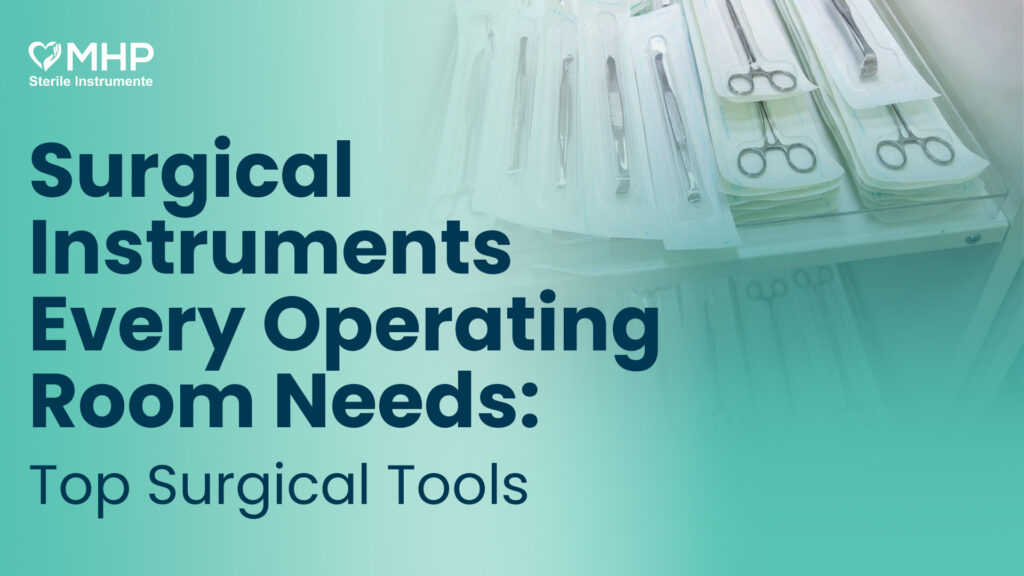
Surgical Instruments Every Operating Room Needs: Top Surgical Tools
Hospitals and surgical centers preparing for modern care should prioritize the top 10 essential surgical instruments every operating room must have in 2026, including a high-quality scalpel and blades, assorted forceps and tissue scissors, versatile retractors, hemostatic clamps, secure needle holders, efficient suction devices, a reliable electrosurgical unit, key laparoscopic instruments for minimally invasive procedures, portable sterilization equipment, and instrument trays organized for rapid access; together these surgical tools and sterilization systems improve operative efficiency, patient safety, and adaptability to advanced techniques used in contemporary operating rooms.
Overview of Surgical Instruments
An overview of surgical instruments highlights the need for quality instruments and high-quality surgical instruments that surgical teams and surgical instrument manufacturers supply, because selecting the right surgical instruments is crucial to safe surgical procedure and improved surgical outcomes; instruments play a crucial role in keeping the surgical field clear and controlling tissues during surgery, with hemostatic forceps and hemostatic forceps are used to arrest bleeding, surgical clamps and surgical hooks for grasping, and surgical retractors and surgical probes to expose and explore anatomy. Specialized surgical instruments such as tapered surgical needles, surgical rongeurs, surgical drills and saws, surgical staplers, and state-of-the-art instruments offer advanced surgical capabilities, and new instruments and upgraded surgical equipment indicate that the global demand for specific instruments will grow. Whether purchasing from surgical instrument suppliers or online, medical teams must have surgical instruments in the right quantities and on time, as they are essential and require proper maintenance to ensure best surgical practices and long-term improvements in surgical outcomes.
Definition and Importance of Surgical Instruments
Surgical instruments assist in various procedures and affect patient outcomes. Each tool is designed for specific tasks, making them essential for surgeons. Without these instruments, surgeries would be unpredictable and more dangerous. Quality Surgical Instruments are the backbone of successful procedures. Quality surgical instruments enhance safety and improve patient outcomes.
Categories of Surgical Instruments
Every operating room has a categorical system for aligning surgical instruments. They assist in cutting various tissues and bones. These surgical instruments are used to grasp specified regions. These are known as retractors. Surgical instruments come in different categories, each designed for specific tasks. Cutting instruments like scalpels and scissors are used to make incisions. Grasping instruments, such as forceps and clamps, are essential for holding tissues together during operations.
Learn more about our recent article on Surgical Forceps: How to Choose the Right Forceps Type.
Common Surgical Instruments Every Operating Room Uses
Surgeons demand a ready supply of common surgical instruments at all times. Each surgical tool performs a specific function, ensuring streamlined operations and surgeries. Every surgical field has essential operating room instruments that are crucial to effective patient care. Working without these instruments is almost impossible.
Top 10 Surgical Instruments Every Operating Room Should Have
In this article, we will walk you through the top 10 surgical instruments every operating room should have to carry out the process of surgery efficiently. In this article, we outline the top 10 surgical instruments every operating room should have to ensure unparalleled efficiency and emphasize their crucial role in successful surgeries. Here, we discuss the top 10 surgical instruments used in every OR.
Scalpel: The Essential Cutting Tool
Surgical scalpels are precise instruments used to make incisions in a surgical setting, where they play a crucial role in ensuring accuracy. These are used to make incisions in the skin and soft tissues to facilitate surgery. Most scalpels come with single-use disposable blades to reduce the risk of infection. Most surgical scalpels are available in blade sizes 10, 11, and 15, used for large incisions, sharply angled cuts, and finer notches, respectively. Surgical scalpels are used for incision and are crucial to the success of surgical procedures. They facilitate the field by making notches and incising different tissues and organs. The scalpel is among the earliest and most basic surgical instruments. The blade is extremely sharp, allowing a surgeon to make a very precise incision.
Forceps: Grasping and Holding Instruments
Surgical forceps are well-structured grasping instruments used to secure tissues or organs. They are either serrated or non-serrated. Tissue Forceps are non-serrated and designed to grip fine tissues during surgery or dissection. Bonney Forceps are heavy-duty and designed to cast a firm grip on thick tissues. Adson Forceps are serrated for holding thick tissues. Surgical forceps have a tweezer-like construction. Tissue Forceps help grab and hold the tissues during surgical manipulation. Bonney Forceps are used to hold sturdy tissues. Adson Forceps are designed for holding thicker tissues and organs. Forceps are a versatile instrument used to grasp, hold, and manipulate tissue and materials.
Scissors: Types and Their Uses in Surgery
For cutting and dissection, having surgical scissors at hand is important. These scissors assist in incising complete organs or cutting frail internal structures. They come in several jaw styles, including curved and straight. Mayo scissors are typically heavy-duty instruments used to cut thick tissues and sutures. Metzenbaum scissors are primarily used in delicate heart surgery to notate lighter tissues. Iris scissors are the most precise, as they enable cutting of fine sutures and delicate organs. Every operating room maintains a ready supply of efficient, reliable surgical scissors, as these instruments are crucial for various surgical tasks. These tools are the most sought-after in the working field. Surgeons and healthcare practitioners use them to cut through tissues and organs. Mayo scissors are heavy-duty and used to cut sturdy tissues and organs. Iris scissors are commonly used in microsurgery and ophthalmology, where surgical instruments are critical to delicate procedures. Metzenbaum scissors are primarily used to notch delicate tissues, and are useful for cutting sutures too.
Best Surgical Instruments for Every Medical Procedure
For hospitals planning their procurement roadmap, the top 10 essential surgical instruments every operating room must have in 2026 include a modern scalpel set, versatile forceps, reliable retractors, high-performance suction devices, advanced electrosurgical units, laparoscopic trocars and scopes for minimally invasive procedures, precise needle holders for suture control, effective hemostasis clamps, tissue scissors, and robust sterilization-compatible instrument trays—each selected to improve patient outcomes, streamline workflows, support evolving minimally invasive and robotic techniques, and meet rigorous sterilization and regulatory standards.
Essential Surgical Instruments for Different Specialties
In orthopedic surgeries, specialized instruments such as rongeurs and chisels are central, underscoring their crucial role in the surgical process. They help in bone manipulation and repair. Laparoscopic surgeries use specialized instruments designed for minimally invasive procedures, underscoring the crucial role of surgical instruments in modern medicine. Orthopedic surgeons require specialized instruments such as bone saws and drills. Neurosurgeons rely on delicate micro-instruments.
Learn more about our recent article on Surgical Instrument Quality Control: Stainless Steel for Manufacturers.
Innovations in Surgical Instrument Design and Functionality
Innovations focus on enhancing precision and safety during procedures, underscoring the crucial role of surgical instruments in improving surgical outcomes. New materials and designs are emerging, resulting in more ergonomic and adaptable instruments that underscore the crucial role of surgical instruments in enhancing surgeon comfort. For instance, instrument handles now feature improved grips, reducing the risk of slippage during critical surgeries, which is vital given the role of surgical instruments in patient outcomes. Surgical instrument design is evolving rapidly, reflecting the crucial role these instruments play in advancing medical technology. In 2026, we see new trends focused on precision and ergonomics. Lightweight materials enhance maneuverability. Advanced coatings reduce friction and extend the lifespan of surgical instruments, ensuring they perform at their best. Robotic-assisted surgery tools have gained popularity. AI-driven instruments analyze patient data in real time, providing insights during procedures.
Choosing the Right Surgical Instruments for Efficiency
Choosing the right surgical instruments is critical for specific procedures. Each surgical technique requires different tools to ensure success. For a delicate operation, precision instruments are essential. Understanding the intricacies of various surgical techniques informs instrument selection, underscoring the crucial role of surgical instruments in achieving desired results. Surgeons must continuously assess their needs and preferences.
The Art of Surgery and Instrumentation
In “The Art of Surgery and Instrumentation” the discussion emphasizes that selecting the right surgical instrument and quality surgical instruments is crucial for patient safety and optimal surgical outcomes, and a concise overview of surgical instruments highlights top 10 essential surgical instruments every operating room must have in 2026; these best surgical instruments include scalpel and surgical scalpels for precision incisions, surgical scissors and scissor types that demonstrate how scissors are used, clamps and hemostatic forceps to control bleeding, tissue forceps and surgical forceps for a secure grasp (forceps are used to hold delicate tissue), surgical retractors and surgical probes to expose and explore the surgical field, and specialized surgical instruments such as surgical rongeurs, surgical drills and saws for specific procedures. Every operating room benefits when surgical teams and surgeons use instruments available from trusted surgical instrument manufacturers, since instruments help maintain quality, support improved surgical techniques and practices, and play a crucial role in medical procedures; an understanding of surgical instrument design, categories of surgical instruments and the right instruments for each surgical procedure indicates that the global surgical community is moving toward standardizing the top surgical instruments and ensuring instruments are essential, available, and designed for safety in 2026.
Understanding the Role of Surgical Instruments in Successful Outcomes
The proper surgical instruments must be in place to execute a successful procedure. Every instrument is essential to a surgeon’s work and helps ensure patient safety, as surgical instruments play a crucial role in the overall success of the procedure. Understanding the role of surgical instruments in successful outcomes is crucial for patient safety, procedural efficiency and optimal surgical results; in 2026, the top 10 essential surgical instruments every operating room must have in 2026 will reflect advances in materials, ergonomics and multifunction design, yet the basics remain vital — precise scalpels and blades for clean incisions, versatile forceps for atraumatic tissue handling, reliable needle holders for secure suturing, high-quality retractors to maintain exposure, scissors designed for tissue and suture cutting, hemostats and clamps for effective bleeding control, suction devices for a clear field, electrosurgical instruments for coagulation and cutting, staplers for rapid wound closure, and advanced imaging-compatible instruments for minimally invasive and robot-assisted procedures; together these tools, maintained to sterile standards and matched to the surgical team’s expertise, directly influence operative times, complication rates and recovery, making instrument selection, upkeep and training indispensable components of achieving consistently successful outcomes in modern operating rooms.
Training Surgeons: Mastery of Surgical Instruments
Training surgeons to master surgical instruments is critical for patient safety and efficiency, and modern curricula increasingly incorporate simulation-based practice, ergonomics education, sterilization protocols, and competency assessment to ensure proficiency with the top 10 essential surgical instruments every operating room must have in 2026; this includes focused modules on laparoscopic and robotic-assisted instrument handling, suturing techniques, correct instrument selection, routine maintenance, and adherence to safety protocols so teams can operate confidently in high-stakes environments.
Future Trends in Surgical Instrument Development for 2026
As hospitals prepare for 2026, the top 10 essential surgical instruments every operating room must have in 2026 will reflect future trends in surgical instrument development, emphasizing minimally invasive and robotic-assisted tools, smart instruments with AI integration, ergonomic design for surgeon comfort, biocompatible materials and advanced sterilization efficiency, disposable versus reusable strategies to reduce infection risk, augmented reality guidance and real-time imaging compatibility, and rapid prototyping through 3D printing to enable customizable instruments that improve outcomes and streamline workflows.
For additional technical standards and global guidelines for medical instruments, consult trusted sources such as the World Health Organization (WHO) and the European Commission’s Medical Devices Regulation (MDR). These organizations provide up-to-date information on safety, compliance, and innovation in healthcare.
You can also explore more educational resources and product insights directly on our website, through pages such as About Us, Our Products, and Contact Us, where we regularly publish updates and technical information on sterile and single-use instruments.