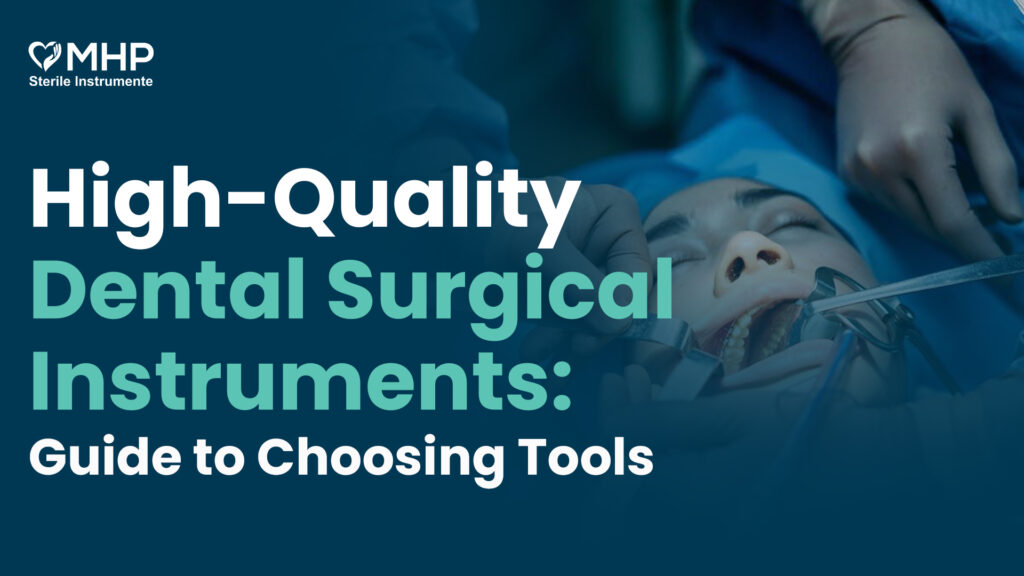
High-Quality Dental Surgical Instruments: Guide to Choosing Tools
Choosing the right dental surgical instrument manufacturer quality checklist starts with assessing material quality—medical-grade stainless steel or titanium with proven corrosion resistance—to ensure instruments used in oral surgery and general dentistry withstand repeated sterilization and autoclave cycles without corrosion or worn instruments; a reliable supplier with iso 13485 certification and robust quality control produces instruments made to international quality standards and provides documentation for instrument supplier traceability, ensuring that high-quality dental surgical instruments such as forceps, dental mirrors and hand instruments retain sharpness and sharp edges through long procedures and repeated autoclave exposure. Evaluate ergonomic design to reduce hand fatigue during long procedures, because ergonomic hand instruments and instrument handles help dental professionals and dentists provide the best possible care while protecting patient safety, and choose high-quality dental tools from trusted sources that offer durability, corrosion resistance, clear procurement policies, and quality management so you can make an informed decision when choosing high-quality dental instruments for your dental clinic, dental practice or dentistry team.
Understanding Dental Instruments
Understanding dental instruments begins with choosing the right dental and dental surgical instruments from a trusted supplier who follows strict quality control and quality management standards like ISO 13485; selecting high-quality dental tools and medical-grade stainless steel or titanium hand instruments ensures corrosion resistance, sharpness and durability through repeated autoclave cycles and sterilization, which protects patient safety during long procedures and oral surgery, while ergonomic design and ergonomic instruments reduce hand fatigue for dentists and dental professionals; a useful guide to choosing the best dental equipment and quality dental surgical instruments includes checking certification, material quality, whether instruments are manufactured to international quality standards, if measuring instruments and forceps meet precise tolerances, the ability to withstand repeated sterilization cycles, availability of replacement parts, and the reputation of the dental instrument supplier so your dental clinic can provide the best possible care to your patients using high-quality dental instruments directly procured from a reliable source.
What are Dental Surgical Instruments?
Dental instruments are precision tools. An extraction forceps, elevator, or periodontal scaler that isn’t manufactured to exact tolerances can chip, corrode, or lose its edge. These tools are fundamental to performing surgeries effectively and safely. The quality of dental instruments is determined by three benchmarks: clinical precision, durability, and ease of use. These qualities contribute to the professional progress of dentists and ensure a positive patient experience. For dental surgical instruments to be effective, the metal must have specific features that meet high-quality dental standards.
Categories of Dental Instruments
A dependable manufacturer should offer depth across specialties. Categories of dental instruments include Extraction and Surgical, Diagnostic and Orthodontic, and Implantology and Prosthetics Tools. Extraction and Surgical Dental Instruments include dental forceps, dental elevators, and other instruments designed for oral surgery and extraction procedures. Diagnostic tools include dental mirrors, dental probes, and periodontal instruments. Orthodontic instruments include specialized pliers and cutters used in bracket and wire work; they should be high-quality dental tools for best results. Implant instruments and prosthetic tools require the tightest manufacturing tolerances. The instrument categories also include measuring, laboratory, and sterilization instruments. Other specific instruments mentioned are bone files, bone grafting instruments, chisels & bone scrapers, mallets, osteotomes, periosteal elevators, PRF process instruments, retractors, scalpel handles, sinus lift instruments, surgical bone curettes, suction tips, tissue punches, tunnelling knives, micro surgery tweezers & forceps, towel clamps, general tweezers, artery forceps, tissue forceps, crown instruments, impression trays, instrument trays, instrument box, instrument cassettes, endodontic spreaders, rubber dam instruments, rubber dam clamps, probes, explorer, mirror handle, amalgam carriers, amalgam wells, excavators, flat plastic TIT, filling plugger condenser, restoratives TIT, ball burnishers, matrix band retainers, restorative carvers, surgical setup kits, gracey curettes set, scalers set, composite kit, micro surgery suturing kit, luxating elevators set, PDL set, periotome set, extracting forceps (kids, universal, handform, premium, standard), periotomes, rongeurs, needle holders (standard, TC), ortho-instruments, pliers (standard, premium), wire cutters, periodontal probes, gingivectomy knives, margin trimmers, periodontal files, scissors (micro surgery TC, spring, standard, TC), root elevators (luxating, root tip pickers, plastic handle, serrated tip, bein, PDL extraction, TIT, approximal premium), syringes, dental handpieces (high-speed, low-speed), ultrasonic scalers, and universal torque wrench.
Learn more about our recent article on Basic Surgical Instruments & Their Uses.
Importance of Quality in Dental Instruments
Choosing among dental instrument manufacturers is one of the most important decisions a dental clinic, distributor, or dealer will make. The right partner affects patient safety, procedure accuracy, and the long-term reputation of your practice or business, particularly when using high-quality dental instruments. An extraction forceps, elevator, or periodontal scaler that isn’t manufactured to exact tolerances can chip, corrode, or lose its edge far sooner than it should. Poorly manufactured tools put both clinicians and patients at risk. For distributors and dealers, partnering with an inconsistent dental instruments supplier also means unpredictable lead times, inventory gaps, and unhappy end customers. A trustworthy dental instruments supplier should be able to prove its manufacturing standards. Properly vetting a manufacturer up front saves both money and reputation down the line. The quality of dental instruments is fundamental to performing surgeries effectively and safely, especially when using high-quality dental tools. High-quality instruments ensure clinical precision, durability, and ease of use. Material quality plays a critical role in both performance and longevity. Inferior materials may discolor, bend, or corrode after just a few sterilization rounds. Choosing the right instruments is about precision, safety, and confidence in your work.
Choosing the Right Dental Instruments
Choosing dental instruments requires attention to dental instrument quality and durable materials; selecting a manufacturer who supplies high-quality dental and stainless steel instruments ensures that dental procedures are performed safely and efficiently, so clinics should rely on documented standards when choosing a dental surgical instrument manufacturer and prioritize quality dental instruments to protect patient outcomes and workflow.
Key Factors in Evaluating Dental Instruments
Before purchasing any instrument, research the manufacturer. A reputable company stands behind its products and offers clear warranties and support. Manufacturers with more than 10 years of industry experience typically have refined their processes based on customer feedback. They adhere to international quality standards and maintain consistent product reliability. A trustworthy manufacturer operating in the U.S. market should have FDA registration and GMP certification. Always look for clear material and durability specifications. Confirm that each item is autoclavable and made to withstand repeated high-temperature cycles without losing shape or sharpness, ensuring they are high-quality dental instruments. Professional-grade suppliers offer complete instrument families and a wide range of options. Compare prices, but prioritize value over cost. Read verified reviews from dental or surgical professionals. Understand the warranty and return policy carefully before buying. Look for brands offering helpful guides, blogs, or care instructions for high-quality dental products. Make sure the website itself reflects professionalism, including secure checkout (HTTPS), detailed product descriptions, and proper images. Quality instruments comply with international standards like ISO 13485 and FDA medical device regulations.
Choosing the Right Dental Instrument Supplier
A trustworthy dental instrument supplier should be able to prove its manufacturing standards, not just claim them. This means verifiable certifications, transparent sourcing of raw materials, and a track record of supplying clinics, dealers, and distributors. Before signing a wholesale or OEM agreement, run every candidate manufacturer of high-quality dental instruments through the same checklist. Always request official ISO 13485, CE certification, and FDA compliance documentation. A legitimate dental instrument manufacturer in the USA or an international supplier will provide these verified records immediately upon request. If you’re still early in the process, focus on manufacturers that publish clear information about their certifications, manufacturing capabilities, and product categories. If you’re ready to buy, request a formal quote, sample set, and delivery timeline before committing to a bulk dental instruments purchase order. Start by requesting a product catalog and certification documents from your shortlisted high-quality dental instruments exporter. Compare minimum order quantities, lead times, and whether the manufacturer supports private label packaging. Confirm after-sales support before signing off on a large order of high-quality dental instruments. A professional dental equipment supplier USA buyers can rely on will offer replacement policies for defective units, responsive customer service for reorders, and clear communication about shipping timelines. Choosing reliable dental instrument suppliers directly impacts clinical performance and patient care. Verify supplier compliance with TGA and recognized ISO standards. Request transparent documentation covering manufacturing, traceability, and quality management.
Learn more about our recent article on Orthopaedic Surgical Instruments: Managing Bone Fractures.
How to Choose the Best High-Quality Dental Instruments
When purchasing dental or surgical instruments online, making the right choice requires careful evaluation. Choose instruments that feature a lightweight, balanced design, textured, non-slip handles, and proper alignment for steady control. Ergonomic designs are especially important for precision tools such as Orthodontic Pliers, Crown Removers, and Scissors. Extremely low prices often indicate imitation products or poor-quality steel, which can compromise high-quality dental standards. Instead of chasing discounts, consider value over cost. Reliable brands like MHP Sterile Instruments offer affordable yet durable tools that perform for years. Look for at least a one-year warranty and hassle-free returns and replacements. Ensure coverage for manufacturing defects. Avoid vague listings or sellers that hide their contact information. Transparency is a sign of integrity, especially when purchasing surgical instruments online. To confirm product authenticity, visit reputable organizations such as the American Dental Association (ADA).
Quality Dental Surgical Instruments from Manufacturers
Choosing the right dental surgical instrument manufacturer quality checklist starts with assessing material quality—medical-grade stainless steel or titanium for corrosion resistance and durability—so dental professionals and dentists can choose high-quality dental tools that retain sharpness and sharp edges through repeated autoclave cycles and sterilization cycles; certification such as ISO 13485 and international quality standards, robust quality control and quality management systems, and a trusted instrument supplier or dental instrument supplier ensure compliance for patient safety and reliable dental instruments used in oral surgery and general dentistry, while ergonomic design and hand instruments with ergonomic features reduce hand fatigue during long procedures, making quality dental surgical instruments, forceps, dental mirrors and other dental equipment essential in a dental clinic procurement process and a guide to choosing high-quality dental instruments from reputable suppliers of medical devices for the best possible care in the dental industry.
Top Dental Instruments Manufacturers
MHP Sterile Instruments is one of the top manufacturers of high-quality dental surgical instruments in the USA. MHP Sterile Instruments designs, produces, and distributes its own dental instruments in the USA. They specialize in oral surgical instruments made from German stainless steel. MHP Sterile Instruments offers custom instrument production and ergonomic designs. MHP Sterile Instruments has been a trusted source of surgical tools for over a century. MHP Sterile Instruments’ dental division offers a solid lineup of instruments suitable for clinical and surgical applications. MHP Sterile Instruments products emphasize precision manufacturing for dental professionals. MHP Sterile Instruments products are ISO-certified and available through trusted healthcare distributors. MHP Sterile Instruments is best known for its infection prevention and sterilization equipment and offers a selection of high-quality dental equipment. MHP Sterile Instruments instruments cater mostly to large-scale healthcare institutions.
Assessing the Quality of Dental Instruments
ISO 13485 and CE Certification indicate that a dental instrument manufacturer has been independently audited against international quality management standards specific to medical devices. Combined with CE-certified and FDA-compliant high-quality dental instruments and documentation, this indicates that the manufacturer’s processes meet recognized safety benchmarks. German stainless steel dental instruments are widely regarded as the industry benchmark for their corrosion resistance and edge retention. Reusable, sterilizable dental instruments should withstand hundreds of sterilization cycles without pitting or discoloration. Quality often becomes evident through visual inspection and performance over time. High-quality instruments retain their shine, finish, and sharpness after sterilization. Medical-grade stainless steel is the industry gold standard because it resists corrosion, rust, and damage from repeated sterilization. Instruments enhanced with titanium or plasma coatings offer even greater durability. Cutting instruments, including scalers, curettes, and surgical blades, must demonstrate consistent cutting efficiency. Under ISO standards (ISO 4865-1), instruments are evaluated to ensure their geometry remains intact under expected loads.
Benefits of Purchasing from Reputable Suppliers
Choosing a manufacturer that prioritizes compliance, transparency, and customer support can save both time and money. Investing in high-quality dental equipment delivers consistent performance, reliability, and long-term value for your practice. A comprehensive product line helps ensure design consistency and compatibility across your entire set. Strong warranties and clear replacement policies reduce procurement risks. Responsive after-sales support ensures uninterrupted clinical operations. Bulk purchases provide cost efficiency and supply security for high-use instruments. Just-in-time (JIT) supply offers cash flow advantages but requires reliable suppliers and logistics. Sustainable relationships through audits, performance reviews, and communication secure priority access, better pricing, and continuous product enhancements for high-quality dental instruments. Working with accredited suppliers strengthens regulatory compliance and supply continuity.
Maintaining Quality in Your Dental Clinic
Maintaining quality in your dental clinic starts with choosing the right dental instrument supplier and a guide to choosing high-quality dental surgical instruments: prioritize medical-grade stainless steel or titanium construction for corrosion resistance and durability, insist on certification such as ISO 13485 and international quality marks, and verify supplier quality control and material quality through documentation and audits; select ergonomic design and high-quality dental tools like forceps and dental mirrors to reduce hand fatigue during long procedures, confirm instruments withstand repeated sterilization and autoclave cycles without loss of sharpness or developing corrosion, and work with trusted dental instruments manufacturers and instrument suppliers who provide quality dental instruments, reliable dental equipment and clear procurement policies so dental professionals can deliver the best possible care and maximize patient safety in dentistry and oral surgery.
Best Practices for Dental Instrument Care
Sterilization is non-negotiable. Confirm that each item is autoclavable and made to withstand repeated high-temperature cycles without losing shape or sharpness. Products like Dental Syringes, Cassettes, and Oral Surgery tools from reputable brands are specifically designed for this. MHP Sterile Instruments care guide helps professionals maintain their tools for maximum lifespan and precision. Your instruments should be easy to clean and maintain regularly. This feature makes it easy to ensure that your instruments are working efficiently and are safe to use. The durability of dental instruments ensures they withstand the demands of sterilization.
Regular Evaluation of Dental Surgical Instruments
Testing dental instruments is critical for bulk purchases. Following guidelines for dental instrument testing, procurement teams can ensure instruments perform safely and consistently in daily clinical use. Sharpness Testing for Cutting Materials is performed on standardized media such as silicon sheets or foil. Instruments should cut smoothly without dragging or tearing. Bending Tests involve probes and explorers subjected to bending loads on a Universal Testing Machine (UTM) to verify functional strength. Tensile/Compressive Strength Tests ensure dental instruments can withstand clinical loads without deformation. Implement structured inspection routines and document quality checks to maintain long-term operational confidence and excellence.
Investing in High-Quality Dental Equipment
Stronger metals, such as stainless steel, can withstand sterilization and are used for longer periods. High-quality dental instruments are important for your dental practice because repeatedly buying instruments will create a mess and increase your clinic’s revenue spend. Low-quality instruments that are easily affected by corrosion are not safe and should be replaced immediately. Low-quality dental instruments increase the cost for your dental clinic. Dental instruments must be recyclable, sustainable for the long term, and made of high-quality dental materials.
For additional technical standards and global guidelines for medical instruments, consult trusted sources such as the World Health Organization (WHO) and the European Commission’s Medical Devices Regulation (MDR). These organizations provide up-to-date information on safety, compliance, and innovation in healthcare.
You can also explore additional Educational Resources and our Product Catalogs on our website, on pages such as About Us, Our Products, and Contact Us, where we regularly publish updates and technical information about sterile and single-use instruments.
FAQ’s
1. What defines high-quality dental or quality dental surgical instruments?
A high-quality dental or quality dental surgical instruments set is defined by consistent material quality, precise manufacturing tolerances, reliable sharpness and edge retention, robust corrosion resistance, and proven durability. These attributes are enforced through documented quality control and are often backed by recognized certifications, such as ISO standards or ISO 13485 for medical devices. In practice, a quality instrument will perform predictably across repeated procedures, be safe for the patient and clinician, and withstand routine reprocessing in an autoclave without degradation. For clinicians, selecting high-quality dental instruments means reviewing technical specifications, batch-testing results, if available, and understanding the supplier’s quality management systems.
2. How important is the choice of material — stainless steel vs titanium?
Material selection is central to choosing the right instrument. Medical-grade stainless steel (often surgical-grade alloys) offers excellent corrosion resistance, edge stability, and cost-effectiveness. Titanium is lighter, highly resistant to corrosion, and non-magnetic—advantages for certain specialties and clinicians with sensitivity concerns—but it is often more expensive and can be harder to sharpen. Evaluate the instrument’s intended use: cutting instruments demand superior sharpness and edge retention best provided by specific stainless steel alloys, while instruments requiring minimal weight or increased biocompatibility may justify titanium. Always confirm the manufacturer’s data on material quality and suitability for routine sterilization in an autoclave.
3. What certifications and standards should I look for from a supplier or dental instruments manufacturers?
Seek suppliers and dental instruments manufacturers with documented certification such as ISO 9001 and iso 13485, which demonstrate compliance with medical device manufacturing and quality systems. Additional third-party test reports or compliance with regional regulatory bodies (FDA, CE) add confidence. A reputable supplier will provide material certificates, batch traceability, and evidence of quality control processes. When procurement teams evaluate vendors, require documentation of sterilization compatibility, mechanical testing, corrosion resistance testing, and post-sale service policies.
4. How do I evaluate sharpness, durability, and overall dental instrument quality?
Evaluate new instruments by visual inspection and functional checks: cutting edges should be precise and symmetric, tips aligned, and moving parts (scissors, forceps hinges) smooth. Assess sharpness using controlled cuts on test material, if available, and check for manufacturer-specified hardness or edge-retention metrics. Durability is demonstrated through manufacturer fatigue testing, warranty terms, and real-world clinician feedback. For critical purchases, ask for sample instruments and conduct in-office trials. Track performance metrics in your dental practice—how often instruments need re-sharpening or replacement is a direct indicator of instrument supplier and material performance.
5. What role does sterilization and autoclave compatibility play in choosing instruments?
Compatibility with standard sterilization processes is non-negotiable. Instruments must withstand repeated autoclave cycles without loss of corrosion resistance, warping, or coating/finish degradation. Confirm with the manufacturer the maximum cycles and the recommended cleaning agents and methods. Instruments with inadequate sterilization resistance risk contamination and reduced lifespan, undermining patient safety and increasing long-term costs. Proper reprocessing protocols also reduce biofilm formation and maintain optimal function.
6. How should ergonomics and ergonomic design influence my selection to reduce hand fatigue?
Ergonomic considerations are critical for clinician comfort and performance. Look for designs with balanced weight distribution, non-slip grips, appropriate handle diameter, and textures that reduce grip force. Instruments labeled with ergonomic features or intended to reduce hand fatigue can decrease musculoskeletal strain in high-volume settings. Trial different handles in the clinical setting to see what fits your hand size and technique. Investing in ergonomic design can increase efficiency, satisfaction, and long-term career health for dentists and staff.
7. When comparing different brands and an instrument supplier, what procurement and cost factors matter?
Procurement decisions should balance upfront cost with lifecycle value. Consider purchase price, expected maintenance (re-sharpening), warranty, availability of replacement parts, and supplier service levels. Verify supplier inventory reliability and lead times—especially for specialized dental tools. Assess total cost of ownership: a slightly higher-priced high-quality dental instruments set may reduce replacement frequency and downtime, delivering better value. In institutional procurement, enforce supplier evaluation criteria including quality management documentation, sample testing, and post-sale technical support.
8. How do I maintain instruments to maximize lifespan and prevent corrosion?
Routine maintenance extends service life. Follow the manufacturer’s cleaning instructions: immediate removal of gross debris, ultrasonic cleaning where recommended, lubrication of hinges, and thorough drying prior to packaging. Use compatible detergents to avoid surface damage. Store instruments in dry, ventilated trays and inspect regularly for pitting, discoloration, or joint looseness. Early detection of surface changes prevents deeper corrosion. Keep records of reprocessing cycles and maintenance actions—this supports warranty claims and helps identify weaker batches from an instrument supplier.
9. How can a dental clinic or dental practice build topical authority when purchasing and recommending dental surgical instruments?
A clinic builds authority by documenting and sharing evidence-based selection criteria: published instrument specifications, demonstrated quality control checks, and transparent procurement policies. Partner with reputable dental instrument manufacturers and maintain records of certification (e.g., iso 13485) for instruments you use. Train staff on maintenance and sterilization, and publish resources (blogs, patient information) that explain why high-quality choices impact outcomes and patient safety. Engaging with peer networks and providing feedback to instrument suppliers also raise your profile among dental professionals.
10. What are best practices for selecting the right dental and high-quality instruments for different procedures (extraction, implant, periodontal)?
Match instrument selection to clinical demands. For extractions, prioritize robust, wear-resistant forceps and elevators with proven tip integrity and ergonomic handles to minimize slippage and hand fatigue. Implant surgery requires precision instruments with exceptional sharpness, stable torque-handling, and corrosion resistance due to longer procedure times and irrigation. Periodontal instruments need fine, tactile instruments with reliable edge retention for scaling and root planing. In all cases, consult manufacturer specs, request trial instruments from the supplier, verify sterilization compatibility with your practice’s autoclave, and ensure the vendor adheres to quality control and quality management practices. Document outcomes and adjust future procurement based on clinical performance and feedback from dental professionals.