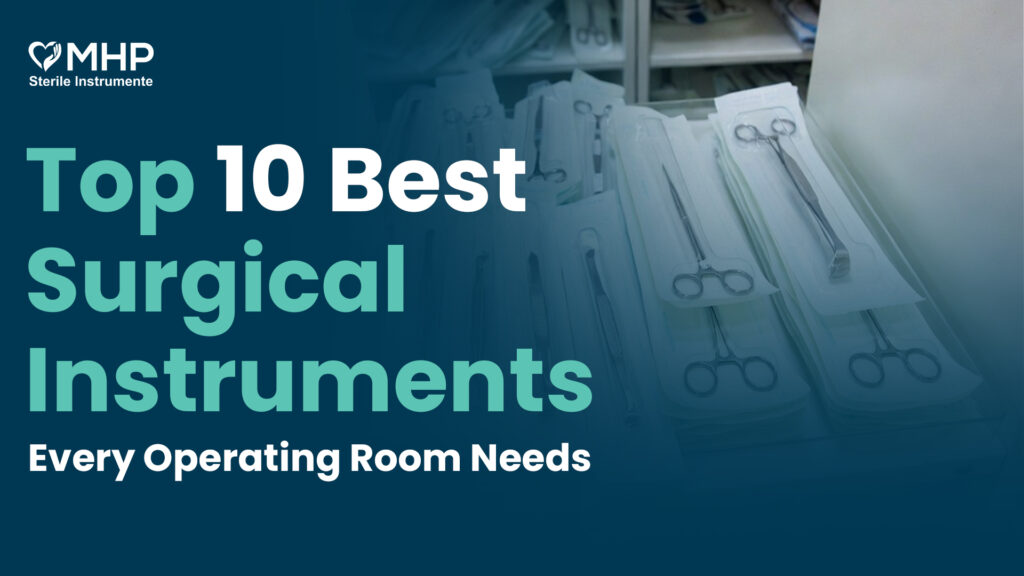
Top 10 Best Surgical Instruments Every Operating Room Needs
Top 10 Best Surgical Instruments Every Operating Room Needs is a practical guide for the surgical team and surgeon to understand the significance of surgical instruments and the essential tools and specialized instruments required across various surgical procedures, from general surgery to minimally invasive instruments for laparoscopic instruments and delicate surgical work; the list covers cutting instruments like scalpel and surgical blades, cutting tools and surgical scissors, grasping instruments such as forceps, tissue forceps, dressing forceps and Adson forceps, plus retractors, needle holders and suture materials, highlighting how surgical instruments are manufactured—often from stainless steel—and how surgical instrument manufacturing and quality surgical instruments impact surgical performance, surgical outcomes and patient safety in the operating room and surgical field, while explaining that the right instruments, high-quality instruments and precision instruments used are essential surgical instruments to reduce surgical trauma, improve access to the surgical site, support successful surgical procedures, and meet the needs of every operating room and medical practice by providing advanced surgical instruments, surgical loupes and specialized surgical instruments for different types of surgeries and common surgical instruments that every medical team should have on hand.
Introduction to Top 10 Best Surgical Instruments
Introduction to top 10 best surgical instruments: Understanding surgical instruments begins with recognizing the essential tools used in every operating room, from scalpel and surgical scissors to forceps, needle holders and retractors; these cutting instruments and grasping instruments—including tissue forceps, dressing forceps and Adson forceps—help the surgical team gain access to the surgical site and perform precise surgical incisions during general surgery or specialized procedures such as laparoscopic instruments for minimally invasive types of surgeries. High-quality surgical instruments, often made of stainless steel, are manufactured to strict standards so surgical instruments are manufactured for durability, sterilization and optimal surgical outcomes; surgical loupes, surgical blades and surgical needles support the surgeon and improve successful surgical procedures, while surgical tools and advanced surgical instruments expand the range of instruments used for complex medical procedures. For medical practice and global surgical environments, having the right tools and understanding these instruments is critical—surgical instruments are essential in every medical setting, and resources like a surgical instruments FAQ or lists of the top 10 surgical instruments every operating room should carry help the surgical team choose quality surgical instruments, ensuring safe access to the surgical field and better surgical outcomes.
Importance of Surgical Instruments in Medical Practice
With consistent strides in the healthcare world, surgical instruments are also seeing a revolution in their design, quality, and accessibility to streamline surgical procedures. The success of every procedure, from the simplest incision to the most complex reconstruction, hinges on the precision, durability, and ergonomic design of foundational tools. Surgical instruments are extensions of a surgeon’s hands, embodying centuries of innovation and meticulous craftsmanship. The instruments are critical components in saving lives and improving health outcomes.
Overview of Surgical Instruments Every Operating Room Should Have
Whether you are an experienced surgeon looking for a promising way to revamp your surgical practice or a novice who is just getting started, Grey Medical has an extensive array of precise and qualified surgical equipment under its belt to boost your surgical practice. This article will walk you through the top 10 surgical instruments every operating room should have to carry on the process of surgery efficiently. Every operating room must be equipped with the best professional surgical instruments to ensure successful surgical procedures and patient safety. A core set of instruments forms the bedrock of surgical practice, performing universal functions that transcend specialties.
What Defines the Best Surgical Instruments?
A high-quality scalpel ensures precise and clean cuts, reducing the risk of complications and helping the healing process. The best surgical scissors provide excellent control, sharpness, and precision. MHP Sterile Instrument forceps are engineered for perfect jaw alignment and optimal spring tension or locking mechanism, ensuring a reliable and gentle grip, minimizing tissue trauma, and promoting rapid healing. A well-designed retractor must provide firm, stable, and atraumatic retraction. MHP Sterile Instrument manufactures retractors with robust, corrosion-resistant materials and precise locking mechanisms, ensuring stable and reliable tissue management for optimal visualization and safety. A needle holder’s ability to securely grip the needle without slippage is paramount. Optical clarity, lightweight design, and precise customization are critical for loupes. Patient comfort, safety, and clear visualization are paramount for specula. A well-designed speculum should open smoothly, lock securely (if applicable), and allow for optimal access without causing unnecessary trauma. Good quality surgical instruments are made of stainless steel. It is very durable, resistant to corrosion, and easy to clean.
Top 10 best Surgical Instruments Every Operating Room Needs
Whether you’re compiling a checklist or stocking an operating suite, the Top 10 Surgical Instruments Every Operating Room Needs highlights why surgical instruments every medical facility should stock items like scalpels, forceps, scissors, retractors, needle holders, clamps, suction devices, electrocautery tools, speculums, and biopsy forceps; surgical instruments are essential for ensuring patient safety, procedural efficiency, and optimal outcomes, because instruments are designed for precision, sterilization compatibility, durable construction, and ergonomic handling to meet the varied demands of modern surgery.
1. Scalpels
Surgical scalpels are precise instruments that assist in making incisions in a surgical setting. These are used to make cuts on the surface of the skin and soft tissues to carefully facilitate an operation. Most scalpels come with single-use disposable blades to tone down any risk of catching the infection. These are designed ergonomically to facilitate efficient handling during an operation. Most surgical scalpels come in varying blade sizes such as size 10, size 11, and size 15 which are used for large incisions, sharply angled cuts, and finer notches respectively. The scalpel is a small, extremely sharp blade used for making incisions in skin, tissue, and muscle. Modern scalpels typically consist of a reusable handle (often made of stainless steel) and disposable blades, which come in a variety of shapes and sizes. The primary use of a scalpel is to create the initial entry point into the body, from the skin down to deeper layers. Surgeons use scalpels for precise tissue dissection, carefully separating layers of tissue to gain access to the surgical site. Small, sharp scalpel blades are often used to obtain tissue samples for diagnostic purposes. Scalpel handles (e.g., #3, #4, #7) vary in size and shape to accommodate different blade types and ergonomic preferences. Blades are typically made of carbon steel or stainless steel, with carbon steel offering superior sharpness and stainless steel providing better corrosion resistance.
2. Surgical Scissors
For cutting and dissection, having surgical scissors at hand is important. These scissors assist in incising complete organs or cutting frail internal structures. They come in several different jaw styles such as curved or straight. Mayo scissors, Metzenbaum scissors, and Iris scissors are among the most widely used. Mayo scissors are usually heavy-duty scissors that assist in cutting thick tissues and sutures. Metzenbaum scissors are mostly used in performing delicate heart surgeries for notching lighter tissues. Iris scissors are the most precise as they help to cut fine sutures and organs. Surgical scissors are cutting instruments available in a vast array of sizes, shapes, and blade configurations, each designed for specific surgical tasks. They can have straight or curved blades, sharp or blunt tips, and varying lengths. Delicate scissors (e.g., Metzenbaum scissors) are used for precise, atraumatic dissection of soft tissues, separating layers without crushing. Stitch scissors (e.g., Iris scissors, Spencer stitch scissors) are designed with fine tips to cut suture material cleanly without damaging adjacent tissues. Heavier scissors (e.g., Mayo scissors) are used for tougher tissues like fascia or muscle, or even to cut surgical wire in orthopedic procedures.
3. Forceps
Surgical forceps are well-structured grasping instruments that assist in getting a hold of tissues or organs. They are either serrated or non-serrated. Among the usual forceps that find application in almost all of the operating theatres are Tissue Forceps, Bonney Forceps, and Adson Forceps, among others. Tissue Forceps, as the name specifies, are non-serrated and specialized for gripping fine tissues during operation or dissection. Bonney Forceps are heavy-duty and designed to cast a firm grip on thick tissues. Adson Forceps are serrated for holding thick tissues. Forceps are grasping instruments used for holding, manipulating, and retracting tissues or objects during surgery. They come in two main categories: non-locking (or thumb forceps/pick-ups) and locking (or clamps/hemostats). Non-locking forceps (e.g., Adson forceps with fine teeth for skin, DeBakey forceps with delicate serrations for vascular tissue) are used for gentle, atraumatic tissue manipulation.
4. Retractors
Attaining a clear surgical field is crucial in surgical procedures to keep the operation streamlined. To achieve this, surgical retractors are used to open up the incised surface. They also assist in reaching the underlying structures, when needed. Working on a ratcheting mechanism, they can either retain their function on their own or require active holding. Among different retractors, the most important are the Deaver Retractor which helps to stretch open the abdominal lining, the Weitlaner Retractor which assists in reaching underlying surfaces, Richardson Retractor which actively keeps the deep tissue forms open to exploration. Retractors are instruments used to hold back skin, tissue, organs, or bones, thereby providing the surgeon with a clear view and adequate access to the surgical site. They are indispensable for maintaining exposure during a procedure. The primary purpose of retractors is to hold open incisions and move surrounding tissues out of the way. By holding tissues away, retractors also protect delicate underlying structures from inadvertent injury. Hand-held retractors require an assistant to hold them in place. Self-retaining retractors have a locking mechanism (e.g., ratchet, screw) that allows them to remain open without constant manual pressure, freeing up surgical assistants.
5. Sutures and Surgical Needles
Structured accordingly to dissect the various tissues, surgical needles come in different shapes. Usually, surgeons require Tapered surgical needles or conventional cutting needles which are specialized needles to work on softer tissues such as the stomach lining and tougher tissues such as skin, respectively. Surgical sutures too can be administered according to the need which either makes them absorbable or non-absorbable in varying sizes. Along with these, a surgical procedure may require skin glue which helps to rejoin torn tissues and can be administered as a substitute to sutures. Surgical staplers are also used for a similar purpose. Needle holders (or needle drivers) are specialized locking forceps used to grasp and manipulate surgical needles during suturing. They are crucial for precise wound closure and tissue approximation. The primary function of needle holders is to securely hold the needle, allowing the surgeon to pass it through tissue with control and precision. After the needle passes, the needle holder is used to grasp the suture material and facilitate knot tying, ensuring secure wound closure.
6. Laparoscopic Instruments
Laparoscopic instruments are used in some areas of surgery that are considered to be minimally invasive. This involves making small incisions in the patient and working with the aid of a scope, to visualise the area inside the patient. It is often known as keyhole surgery.
7. Advanced Surgical Instruments
Surgical Probes are specialized surgical instruments for finding out body cavities and tracing the problematic wounds. Surgical Dilators, as the name specifies, are categorical for dilating open wounds and enlarging the surgical field. Probes assist in gauging the problematic sites in a body during a surgical procedure while a dilator can help to reach the deeply embedded bodily structures for exposure to the surgical field. For precise searching, surgical probes also show marking indentations. Surgical hooks are precise operating room instruments used mostly for abduction and management. Due to their precision, they are also used for examining delicate tissues such as neural tubes and nerves. With their active hold, they allow to grip and distance light tissues which can take up damage if handled with heavy instruments. Mostly Crile Nerve Hooks are used which contribute to handling fragile nerves during any neural surgery. Surgical hooks are also used for retracting purposes during surgery. During surgeries that require cutting hard bones and skulls, surgical drills and saws come in handy. Surgical Drills and Saws are kept lightweight to assist the surgeon during prolonged surgery hours. Surgical Rongeurs are specialized surgical instruments used to extract fragments of bones and bone-like structures. It is also used to remove any tissue during the surgery.
8. Hemostatic Forceps
Hemostatic Clamps are specialized forceps that vary from normal surgical forceps considering their unique locking mechanism which allows them to clamp and restrict the blood vessels to control blood flow. With the assistance of hemostatic clamps, surgeons can minimize the chance of hemorrhage in high-vascular surgeries. Due to their essential locking mechanism, they don’t need active holding to achieve hemostasis and are mostly used in high-precision vascular procedures and organ transplantation. Crile Hemostat, Kelly Clamps, and Kocher Clamp are the most widely used. Crile hemostat is non-serrated and used to snap during blunt procedures. Kelly Clamps assist in tucking thick tissues. Kocher Clamps help to snap the extracted tissue.
9. Surgical Clamps
Hemostatic Clamps are specialized forceps that vary from normal surgical forceps considering their unique locking mechanism which allows them to clamp and restrict the blood vessels to control blood flow. With the assistance of hemostatic clamps, surgeons can minimize the chance of hemorrhage in high-vascular surgeries. Due to their essential locking mechanism, they don’t need active holding to achieve hemostasis and are mostly used in high-precision vascular procedures and organ transplantation. Crile Hemostat, Kelly Clamps, and Kocher Clamp are the most widely used. Crile hemostat is non-serrated and used to snap during blunt procedures. Kelly Clamps assist in tucking thick tissues. Kocher Clamps help to snap the extracted tissue. Hemostatic Forceps or Surgical Clamps are mostly used to close down and clamp blood vessels to prevent haemorrhage.
10. Electrosurgical Devices
In our “top surgical instruments faq’s answered” series, electrosurgical devices are explained as indispensable tools that use high-frequency electrical currents to cut tissue and coagulate blood during procedures; these devices, including monopolar and bipolar units, offer precise hemostasis and reduced blood loss, but require strict safety protocols, proper grounding and training to prevent thermal injury and electrical interference, and regular maintenance to ensure consistent performance and patient safety.
Learn more about our recent article on Titanium vs. Stainless Steel Surgical Instrument Metals.
Common Surgical Instruments Used in Medical Procedures
Common surgical instruments used in medical procedures range from basic cutting tools like the scalpel and surgical blades to grasping instruments such as forceps, tissue forceps, Adson forceps and dressing forceps, while scissor and surgical scissors, needle holders and surgical needles enable precise suturing and closure; these essential tools—often stainless steel medical devices—are found in every operating room and form the core of instruments used by the surgeon and the surgical team during a surgical procedure. Whether for general surgery or specialized procedures, high-quality surgical instruments, laparoscopic instruments and advanced surgical instruments improve access to the surgical site and support successful surgical procedures, and understanding surgical instruments through a surgical instruments FAQ helps medical practice choose the right instruments. From surgical loupes to retractors and specialized surgical instruments, the top 10 surgical instruments every surgeon values, the 7 best surgical instruments lists, and recommendations for surgical instruments every operating room emphasize quality surgical instruments and proper surgical instrument manufacturing to ensure optimal surgical outcomes and safe handling of used surgical instruments in the surgical field. For clinicians evaluating tools used, considerations include cutting instruments versus grasping instruments, the role of needle holders and sutures in wound management, and how instrument choice impacts surgical practice, types of surgeries performed and overall patient outcomes in medical procedures.
Overview of Common Surgical Instruments
To supplement the surgical procedures, every operating room has a categorical alignment of surgical instruments. Three broad categories of surgical instruments are: Instruments for Cutting, Instruments for Grasping, and Instruments for Holding. Instruments for Cutting assist in cutting various tissues and bones, such as surgical blades and scissors. Instruments for Grasping are used to grasp specified regions, such as various types of hemostatic forceps, clamps, and tissue forceps. Instruments for Holding, known as retractors, mostly assist in probing what lies underneath the surfaces and might assist in holding certain organs. A core set of instruments forms the bedrock of surgical practice, performing universal functions that transcend specialties and embodying the fundamental principles of surgery. The 7 best surgical instruments include Scalpels, Surgical Scissors, Forceps, Retractors, Needle Holders, Surgical Loupes, and Specula.
Functionality and Use in Surgical Practice
Surgical scalpels are precise instruments that assist in making incisions in a surgical setting. Surgical scissors assist in incising complete organs or cutting frail internal structures. Surgical forceps are well-structured grasping instruments that assist in getting a hold of tissues or organs. Hemostatic Clamps are specialized forceps that vary from normal surgical forceps considering their unique locking mechanism which allows them to clamp and restrict the blood vessels to control blood flow. Surgical retractors are used to open up the incised surface and assist in reaching the underlying structures. Surgical needles and sutures are structured accordingly to dissect the various tissues and close wounds. Surgical Probes are specialized surgical instruments for finding out body cavities and tracing problematic wounds. Surgical Dilators are categorical for dilating open wounds and enlarging the surgical field. Surgical hooks are precise operating room instruments used mostly for abduction and management. Surgical drills and saws come in handy during surgeries that require cutting hard bones and skulls. Surgical Rongeurs are specialized surgical instruments used to extract fragments of bones and bone-like structures. Needle holders are used to grasp and manipulate surgical needles during suturing. Surgical loupes are magnifying devices worn by surgeons to enhance visual acuity. A speculum is a medical instrument used to open or widen a body cavity or orifice to allow for examination or surgical procedures.
Maintenance of Surgical Instruments
Manufacturers instructions should be followed for lubricating surgical instruments. On articulated joints, lubrication can prevent metal on metal wear so is generally recommended. Surgical instruments should be cleaned in line with the manufacturers recommendations in Europe, as per the Medical Device Directive. Typically, this is either automated or manual cleaning in a washer disinfector and then sterilising in an autoclave. All Simrix reusable surgical instruments are fully autoclave safe and steam sterilization compatible. They can withstand standard autoclave cycles at 134°C without degradation.
Learn more about our recent article on Surgical Instrument Care and Handling: Sterilize Surgical Tools.
Surgical Instruments FAQ
Understanding surgical instruments is essential for any surgical team and medical practice: from common surgical instruments like scalpels, surgical blades and cutting instruments to grasping instruments such as forceps, tissue forceps, dressing forceps and specialized options like Adson forceps and needle holders, the right instruments determine successful surgical procedures and surgical outcomes; in every operating room you’ll find essential tools and quality surgical instruments—stainless steel scalpels, surgical scissors, retractors to provide access to the surgical site, sutures and surgical needles, plus laparoscopic instruments and advanced surgical instruments for minimally invasive types of surgeries—while surgical loupes, medical devices and well-maintained surgical tools support the surgeon and wider surgical team in general surgery and complex medical procedures, and understanding how surgical instruments are manufactured, what instruments are used, where to find top 10 surgical instruments every operating room should have or the 7 best surgical instruments guides helps clinicians choose high-quality surgical instruments and specialized surgical instruments that improve the surgical field, reduce complications, and ensure successful, safe procedures as described in many surgical instruments FAQ resources.
What are the Most Common Surgical Instruments?
Mostly hemostatic forceps, clamps, and tissue forceps are used for casting a firm grip over specified regions during surgery. The scalpel is one of the most common instruments used in surgery. Popular surgical instruments are scissors, artery forceps, needle holders, dissecting forceps, dressing scissors, dressing forceps and retractors.
How to Choose the Best Surgical Instruments?
It is hard to give an overall definition for what makes a high-quality surgical instrument. The material used should be fit for purpose; I.e generally in the UK this would be to BS 5194 which recommends stainless steels for use for surgical instruments. It should have no sharp edges or burrs, other than those for the instrument use. It should be able to pass any industry tests, such as those defined in the British standard BS 5194. For example with scissors, they are requested to cut test pieces.
What are Used Surgical Instruments?
Used surgical instruments are previously owned or employed tools—such as forceps, scissors, retractors, and clamps—that have been cleaned, inspected, and often refurbished for resale; when answering top surgical instruments faq’s answered, key points include verifying thorough sterilization, checking for wear or damage, confirming traceable provenance and proper documentation, and ensuring instruments meet regulatory and hospital standards to protect patient safety; purchasing used instruments can be cost-effective and environmentally responsible when sourced from reputable suppliers who offer warranties, quality grading, and return policies, but buyers should always assess compatibility with surgical procedures, potential impact on outcomes, and the availability of maintenance or sharpening services.
Learn more about our recent article on Sterile Processing & Sterilization for Infection Control.
Conclusion
In summary, this guide on top surgical instruments FAQ’s answered provides clear, practical answers to common questions about selection, use, maintenance, and safety. Understanding these key points helps clinicians, technicians, and procurement teams choose the right instruments, ensure proper sterilization and handling, and maintain peak performance to improve patient outcomes. For complex or institution-specific concerns, consult manufacturer guidelines and your facility’s clinical engineering or sterile processing department.
Summary of the Top 10 Surgical Instruments
The world of medicine is continually altering, evoking a need for advanced surgical instruments which are precise and fashioned along the lines of modern research. This guide discovers the top 10 state-of-the-art surgical instruments every operating room should have to streamline surgical procedures and ensure patient safety to its maximum. The 7 best professional surgical instruments that every operating room should have include scalpels, surgical scissors, surgical forceps, retractors, needle holders, surgical loupes, and vaginal specula.
Final Thoughts on Surgical Instruments Every Operating Room Needs
Grey-Medical has a ready stock of these modernized versions of surgical equipment and operating room instruments available in top quality and made with utmost care and precision. At our manufacturing facility, innovation and maintenance guidelines for surgical equipment are given the utmost importance to help surgeons around the globe keep up with the increasing challenges of surgery. As healthcare is excelling and advancing, keeping Grey-Medical as a surgical companion can go a long way in your surgical career.
For additional technical standards and global guidelines for medical instruments, consult trusted sources such as the World Health Organization (WHO) and the European Commission’s Medical Devices Regulation (MDR). These organizations provide up-to-date information on safety, compliance, and innovation in healthcare.
You can also explore additional Educational Resources and our Product Catalogs on our website, on pages such as About Us, Our Products, and Contact Us, where we regularly publish updates and technical information about sterile and single-use instruments.