Sterile Processing & Sterilization for Infection Control
The role of sterile instruments in infection prevention is central to modern infection control: effective sterile processing and sterilization reduce bioburden through thorough cleaning, disinfection, proper packaging, and validated sterilization cycles, while instrument tracking, sterility assurance practices, and appropriate storage prevent contamination before use; combined with aseptic technique and reprocessing protocols, these measures significantly lower the risk of surgical site infections and support overall patient safety.
Understanding Infection Control
The role of sterile instruments in infection prevention is pivotal: instrument sterilization is crucial to reduce the risk of infection, prevent healthcare-associated infections (HAIs) and surgical site infection, and safeguard patient safety in hospital settings and health care facilities; central sterile and the sterile processing department must implement standardized sterilization protocols and sterilization cycles—using effective sterilization methods such as steam sterilization, ethylene oxide sterilization, hydrogen peroxide gas plasma or hydrogen peroxide sterilization—following guideline for disinfection and sterilization and reprocessing guidelines from the CDC and AAMI, to ensure reusable medical devices, medical and surgical instruments, surgical trays and other medical equipment remain sterile during storage and until use. Proper cleaning and sterilization, validated by biological and chemical indicators, along with disinfection and sterilization in healthcare practices, are critical to reprocess medical devices safely, prevent contaminated surgical instruments from contributing to transmission, and minimize infection risk in operating room, intensive care unit and surgical environments; infection preventionists and infection control teams must assess the risk of infection, apply infection control measures and standardize sterilization procedures and disinfection and sterilization workflows in the processing department to reduce hospital infection, comply with guidelines for disinfection or sterilization, and ensure the safety of surgical patients by addressing inadequate sterilization and maintaining best practices for sterilization of reusable medical devices and sterile medical devices used in surgical procedures.
The Importance of Infection Prevention
Sterile medical equipment plays a critical role in infection prevention by eliminating harmful pathogens during medical procedures. Its effectiveness in reducing healthcare-associated infections (HAIs) has been validated through significant improvements in patient safety outcomes. Recent data highlight notable reductions in infection rates, including a 16% decrease in methicillin-resistant _Staphylococcus aureus_ (MRSA) infections and a 13% reduction in _C. difficile_ infections, and an 11% drop in catheter-associated urinary tract infections (CAUTI). By prioritizing sterility, healthcare providers ensure safer environments for patients and minimize the risk of complications. Clean medical tools lower infections, making healthcare safer for everyone. Careful cleaning removes dangerous germs from medical equipment. Using clean tools during risky procedures stops the spread of germs. Spending on cleaning methods saves money by avoiding extra treatments. Keeping things clean helps patients trust their doctors and nurses.
Key Concepts in Infection Control
Sterile medical equipment refers to tools and devices free of all living microorganisms, including bacteria, viruses, and fungi. This level of cleanliness is achieved through rigorous sterilization processes that meet strict regulatory standards. Organizations like the FDA and ISO have established guidelines to ensure sterility. The FDA recognizes ISO 22441:2022 for low-temperature vaporized hydrogen peroxide sterilization. Ethylene oxide is one of the most common sterilization methods, used for about 50% of sterile medical devices in the United States. Key characteristics of sterile equipment include a controlled environment, air filtration, personnel protocols, surface cleanliness, and monitoring systems. These measures ensure sterile medical equipment meets the highest safety requirements for patient care. Sterilization is the complete elimination of microbial life, including spores, by chemical or physical means. Disinfection is defined as the elimination of pathogenic organisms from inanimate objects except microbial spores. Cleaning of devices is a prerequisite of sterilization and high-level disinfection.
Types of Healthcare-Associated Infections (HAIs)
Healthcare-associated infections (HAIs), or nosocomial infections, are a major public health risk, with hospitalized patients developing infectious symptoms approximately 48 hours post-admission. Symptoms can also manifest post-discharge, as seen with approximately 60% of surgical-site infections (SSIs), which is associated with increased mortality. HAIs associated with medical devices include ventilator-associated pneumonia (VAP), central line-associated bloodstream infections (CLABSIs), catheter-associated urinary tract infections (CAUTIs), and SSIs. These infections lead to prolonged hospital stays, risk of sepsis, and mortality in intensive care units (ICUs). There is an increased risk of HAIs in ICU patients, with approximately 30% acquiring at least one infection. Medical device-associated infections are more commonly associated with reusable medical devices, including surgical forceps, endoscopes, bronchoscopes, transesophageal echocardiographs, and laryngoscopes, than with single-use devices. In the United States, approximately 1.7 million cases of HAIs and 99,000 deaths occur annually, where medical devices are causative of approximately 80% of UTIs, BSIs, and pneumonia in admitted patients. In Europe, the prevalence of HAIs is 7.1%, with approximately 4 million cases annually.
Sterilization Methods
Sterilization methods play a critical role in infection prevention and infection control in healthcare and hospital settings, where proper sterilization of reusable medical devices, medical and surgical instruments, and medical equipment is essential to reduce the risk of infection and healthcare-associated infections (HAIs); central sterile and the sterile processing department must standardize cleaning and sterilization, disinfection and sterilization in healthcare, and sterilization protocols to ensure sterile medical devices remain sterile during sterile storage and throughout patient care.
Best practices and guidelines for disinfection and sterilization, including steam sterilization, hydrogen peroxide sterilization, hydrogen peroxide gas plasma, ethylene oxide sterilization, and other advanced sterilization methods, must be selected based on an assessment of the risk of infection approach and validated with biological and chemical indicators across sterilization cycles to verify the sterilization process.
Adherence to CDC and AAMI recommendations, and guidance from the Centers for Disease Control, supports infection control measures that prevent transmission, surgical site infection, and hospital infection in operating rooms and intensive care units, while reprocessing medical and reprocessing protocols in the processing department and central sterile help prevent contamination of surgical instruments and medical devices during surgical procedures.
By integrating appropriate disinfection or sterilization, implementing sterilization procedures and practices, and ensuring staff understand when items require sterilization versus disinfection, healthcare facilities can minimize infection risk, improve patient safety, and affirm the pivotal role of sterile instruments in disease control and prevention.
Overview of Sterilization Techniques
Sterilization methods ensure that medical supplies meet the highest safety standards. Common techniques include steam sterilization, ethylene oxide gas, and low-temperature hydrogen peroxide. Electron beam sterilization service uses high-energy electrons to destroy microorganisms. This method is fast, chemical-free, and suitable for heat-sensitive materials. It is increasingly used for sterilizing surgical instruments and single-use medical devices. Sterilization requires the complete elimination of microbial life, including spores, by chemical or physical means. Other methods include autoclaving with heat/pressure, vaporized hydrogen peroxide (VH2O2), radiation (Gamma, E beam, and X-ray), and ethylene oxide (EtO) gas. Currently, EtO and radiation modalities are the main terminal sterilization methods in use, with thermal (heat) sterilization applied in hospital settings. ISO 22441:2022 supports the sterilization of healthcare products using low-temperature VH2O2 as an alternative to EtO. VH2O2 offers a viable alternative to EtO as an effective sterilizing agent, as it is nontoxic, fast, and leaves no harmful residues on the product.
Comparison of Disinfection and Sterilization
Sterile equipment undergoes rigorous sterilization, while non-sterile tools do not. This distinction significantly impacts contamination rates and patient outcomes. Sterilization is defined as the complete elimination of microbial life, including spores, by chemical or physical means, with a sterility assurance level (SAL) of 10-6. Disinfection is defined as the elimination of pathogenic organisms from inanimate objects, excluding microbial spores, and is categorized as high-level or low-level disinfection. Cleaning of devices is a prerequisite of sterilization and high-level disinfection. Critical medical devices require sterilization; semi-critical devices require high-level disinfection or sterilization; and non-critical devices require low- to intermediate-level disinfection.
Choosing the Right Sterilization Method
Device factors, including device complexity, material type, the presence of biologics (combination devices), and heat sensitivity, affect the sterilization method used. Issues relating to carcinogenic emissions from EtO gas have motivated the EPA to propose limiting emissions by 80% or to seek alternative sterilization methods for medical devices. ISO 22441:2022 supports the sterilization of healthcare products using low-temperature VH2O2 as an alternative to EtO. VH2O2 offers a viable alternative to EtO as an effective sterilizing agent, as it is nontoxic, fast, and leaves no harmful residues on the product. VH2O2 sterilizing equipment is used in hospital settings for low-temperature sterilization. FDA-approved chemicals used as high-level disinfectants and sterilizing solutions include ≥2.4% glutaraldehyde, 0.55% ortho-phthalaldehyde (OPA), 0.95% glutaraldehyde with 1.64% phenol/phenate, 7.35% H2O2 with 0.23% peracetic acid, 1.0% H2O2 with 0.08% peracetic acid, and 7.5% H2O2. Non-FDA-approved disinfectants, such as iodophors, chlorine solutions, alcohols, quaternary ammonium compounds (QACs), and phenolics, are not used for reprocessing reusable medical devices.
The Role of Sterile Processing
The role of sterile processing is a pivotal role in preventing healthcare-associated infections and reducing the risk of infection by ensuring that medical and surgical instruments and reusable medical devices remain sterile through standard sterilization and advanced sterilization methods; sterile processing departments in health care facilities follow infection control principles and guidelines for disinfection and sterilization to clean and sterilize medical equipment, using sterilization cycles such as steam sterilization, ethylene oxide sterilization, hydrogen peroxide gas plasma and hydrogen peroxide sterilization as part of sterilization procedures and sterilization protocols. By applying best practices for cleaning, disinfection, and sterilization in healthcare, proper sterilization and disinfection prevent contamination of surgical instruments and sterile medical devices used in operating room and intensive care unit settings, thereby lowering surgical site and hospital infection rates and supporting patient safety. The central sterile or sterile processing department must standardize processing, use indicators to verify the sterilization process, reprocess and sterilize reusable items according to AAMI and CDC guidance, assess the risk of infection, and implement infection control measures to control transmission and achieve disease control and prevention, demonstrating the key role and vital role of sterile instruments and sterilization in safeguarding patient care during surgical procedures and throughout healthcare facilities.
Steps in Sterile Processing
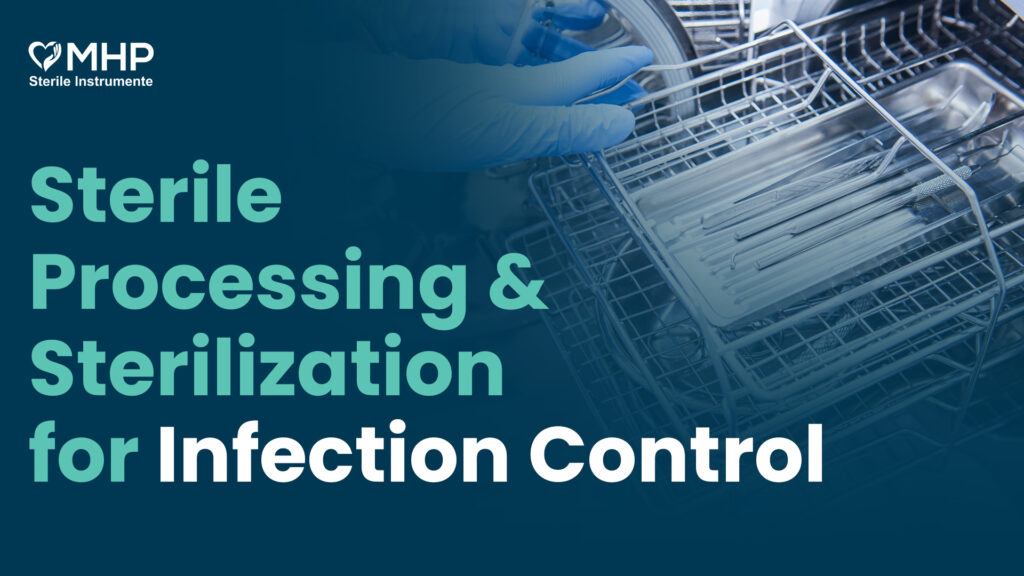
Sterile processing is the essential task of meticulously cleaning, inspecting, testing, sterilizing, storing, and tracking reusable medical instruments and devices. The cyclical process begins when used instruments are taken to the Sterile Processing Department (SPD) for cleaning. Decontamination is the removal of microorganisms and foreign materials from an instrument. The SPT cleans the instrument with detergents or enzymatic cleaners and specialized tools such as ultrasonic cleaners, washer-sanitizers, washer-sterilizers, and washer-disinfectors. Clean instruments are inspected for signs of damage or wear and tested for functionality and alignment. The Association for the Advancement of Medical Instrumentation guidelines recommend assembling instruments in trays or baskets. The assembled instrument trays are carefully packaged for transportation to the sterilization facility. Sterilizing destroys microbial life on surgical instruments. After sterilization, instrument trays are transferred to a controlled environment where temperature, airflow, humidity levels, and cleanliness are strictly maintained to prevent contamination.
Reprocessing Surgical Instruments
Reusable devices must be reprocessed or decontaminated (cleaning, disinfection, and/or sterilization) to eradicate microbial life prior to subsequent use. Improperly sterilized critical devices containing MDR species have been associated with endoscopy procedures. MDR pathogens, including CRE, were isolated from patients who had undergone endoscopic retrograde cholangiopancreatography procedures using reprocessed duodenoscopes. Cleaning is an absolute prerequisite for high-level disinfection and sterilization, as the efficacy of the sterilant is affected by organic matter and the device’s organic load. Contaminated reusable devices can harbor bacterial and fungal species in planktonic, biofilm, and spore forms that can withstand reprocessing under varying exposure conditions. The complex structure of such devices also poses challenges for achieving uniform exposure to the sterilizing or disinfecting agent. The sterile processing area should be divided into at least three areas: decontamination, packaging, sterilization, and storage.
Importance of Staff Training in Sterile Processing
Ensuring consistency in sterilization practices requires a comprehensive program that ensures operator competence and proper methods for cleaning and wrapping instruments, loading and operating the sterilizer, and monitoring the entire process. Healthcare personnel should perform most cleaning, disinfection, and sterilization of patient-care supplies in a central processing department to more easily control quality. Personnel working in the decontamination area should wear household-cleaning-type rubber or plastic gloves when handling or cleaning contaminated instruments and devices. Face masks, eye protection, and appropriate gowns should be worn when there is potential for exposure to blood and contaminated fluids. Education and certification are important in the sterile processing industry. Poorly trained technicians jeopardize quality, safety, and reliability. Currently, six states require SPT certification, and Florida, Minnesota, and Massachusetts are actively pursuing legislation or regulation for SPTs. The Healthcare Sterile Processing Association is pushing for legislation throughout the country mandating certification for these professionals.
Patient Safety and Infection Control
Patient safety and infection control depend on the role in safeguarding patients by ensuring proper sterilization in healthcare facilities, where the sterile processing department and central sterile units reprocess and sterilize reusable medical devices, medical and surgical instruments, and other medical equipment following guideline for disinfection and sterilization to reduce the risk of infection and surgical site infection; standardized sterilization protocols and sterilization cycles—such as steam sterilization, ethylene oxide sterilization, hydrogen peroxide gas plasma or hydrogen peroxide sterilization—combined with thorough cleaning and disinfection, indicators, and sterile storage, form the backbone of infection prevention and infection control measures in hospital settings and operating room and intensive care unit environments. By applying best practices from AAMI and the Centers for Disease Control and Prevention (CDC), assessing the infection risk, and implementing advanced sterilization methods in the processing department, healthcare facilities can prevent transmission of healthcare-associated infections (HAIs), ensure sterile medical devices remain sterile, and support surgical services in minimizing contamination and protecting patient care and disease control and prevention.
Impact of Sterilization on Patient Outcomes
Sterile medical equipment plays a critical role in infection prevention by eliminating harmful pathogens during medical procedures. Its effectiveness in reducing healthcare-associated infections (HAIs) has been validated through significant improvements in patient safety outcomes. Sterile medical equipment reduces the risk of infection during medical procedures, making it essential for surgeries and other high-risk interventions. Sterile equipment is essential in high-risk procedures such as surgeries, catheter insertions, and wound care. These interventions involve direct contact with internal tissues or the bloodstream, where even minor contamination can lead to severe complications. Investing in sterile medical equipment and infection control procedures leads to significant long-term cost savings. Preventing infections reduces the need for extended hospital stays, additional treatments, and expensive antibiotics.
Learn more about our recent article on Surgical Instrument Quality Control: Stainless Steel for Manufacturers.
Monitoring Sterilization Cycles
The sterilization procedure should be monitored routinely using a combination of mechanical, chemical, and biological indicators to evaluate the sterilizing conditions and, indirectly, the microbiologic status of the processed items. Mechanical monitors for steam sterilization include daily assessment of cycle time and temperature by examining the temperature record chart, and assessment of pressure via the pressure gauge. Mechanical monitors for ETO include time, temperature, and pressure recorders that provide data via computer printouts, gauges, and/or displays. Chemical indicators are convenient, inexpensive, and indicate that the item has been exposed to the sterilization process. Biological indicators are recognized by most authorities as the closest to the ideal monitors of sterilization because they measure sterilization directly using the most resistant microorganisms (i.e., _Bacillus_ spores). _B. atrophaeus_ spores (106) are used to monitor ETO and dry heat, and _G. Staphylococcus spores (105) are used to monitor steam sterilization, hydrogen peroxide gas plasma sterilization, and liquid peracetic acid sterilization. Steam and low-temperature sterilizers should be monitored at least weekly using the appropriate commercial spore preparation. Each load should be monitored to determine if it contains implantable objects. If feasible, implantable items should not be used until spore tests are negative.
Best Practices for Ensuring Patient Safety
Proper sterile storage and the use of wrapped sterilized instruments also minimize resource wastage, ensuring efficient use of medical supplies. Standardized sterile practices, including advanced sterilization methods, enhance quality improvement initiatives. By reducing complications and improving patient outcomes, healthcare facilities can allocate resources more effectively. These savings benefit both patients and providers, making sterility a cost-effective solution for infection prevention. Effective infection prevention and control measures, including proper sterilization, can lower infection rates by up to 70%. This significant reduction demonstrates the importance of maintaining sterile storage and adhering to infection control procedures. Wrapped, sterilized instruments help ensure that microorganisms, such as bacteria, cannot contaminate tools before use. Sterile surgical implants protect patients from infections during high-risk procedures. Maintaining hygiene and sanitation in healthcare facilities further minimizes the risk of contamination.
Medical Equipment in Healthcare Facilities
In healthcare facilities, the central sterile or sterile processing department plays a critical role in infection prevention and disease control and prevention by ensuring that medical and surgical instruments, surgical instruments and reusable medical devices are properly cleaned and undergo validated sterilization processes—steam sterilization, hydrogen peroxide gas plasma, hydrogen peroxide sterilization and ethylene oxide sterilization are advanced sterilization methods used according to guideline for disinfection and sterilization to reprocess and sterilize medical device and medical instrument so they remain sterile until use; adherence to sterilization protocols, sterilization cycles, appropriate indicators and standardized sterilization procedures, combined with disinfection and sterilization practices, prevents contamination and reduces the risk of infection, healthcare-associated infections (HAIs) and surgical site infection in operating room, intensive care unit and other hospital settings, protecting patient safety and supporting infection control measures recommended by CDC, centers for disease control and organizations such as AAMI—implementing best practices for sterile storage, processing department workflows and assessment to assess the risk of infection is pivotal to minimize transmission, meet sterilization must requirements for critical role items, and ensure that sterilization in healthcare facilities and the role of sterile instruments in infection prevention remain central to quality patient care and hospital infection prevention and control.
Types of Medical Equipment Requiring Sterilization
Sterile medical supplies include a wide range of items used in healthcare settings. Common examples are surgical instruments such as scalpels and forceps, sterile gauze and dressings for wound care, and catheters and intravenous (IV) lines. Reusable medical devices include surgical forceps, endoscopes, bronchoscopes, transesophageal echocardiographs, and laryngoscopes. Critical medical devices require sterilization; semi-critical devices require high-level disinfection or sterilization; and non-critical devices require low- to intermediate-level disinfection. These devices are classified according to Spaulding’s classification system. The disinfection or reuse of implantable medical devices is not permitted, as it poses a risk to patient safety.
Maintenance of Sterile Equipment
Once items are cleaned, dried, and inspected, those requiring sterilization must be wrapped or placed in rigid containers and arranged in instrument trays/baskets according to guidelines from AAMI and other professional organizations. Hinged instruments should be opened; items with removable parts should be disassembled unless the device manufacturer or researchers provide specific instructions or test data to the contrary; complex instruments should be prepared and sterilized according to the device manufacturer’s instructions and test data. Devices with concave surfaces should be positioned to facilitate drainage of water; heavy items should be positioned not to damage delicate items; and the weight of the instrument set should be based on the design and density of the instruments and the distribution of metal mass. The packaging material must allow penetration of the sterilant, provide protection against contact contamination during handling, provide an effective barrier to microbial penetration, and maintain the sterility of the processed item after sterilization. After sterilization, medical and surgical devices must be handled using aseptic technique to prevent contamination. Sterile supplies should be stored far enough from the floor (8 to 10 inches), the ceiling (5 inches unless near a sprinkler head [18 inches from sprinkler head]), and the outside walls (2 inches) to allow for adequate air circulation, ease of cleaning, and compliance with local fire codes. Medical and surgical supplies should not be stored under sinks or in other locations where they can become wet.
Challenges in Sterilization in Health Care Facilities
A lack of adherence to protocol and limitations associated with each sterilization modality allows for the incidence of disease. Furthermore, concerns about carcinogenic emissions from ethylene oxide (EtO) have prompted the EPA to propose limiting EtO use or to seek alternative sterilization methods for medical devices. With advances in biomaterials and medical devices and the increasing use of combination products, current sterilization modalities are becoming limited. Alarmingly, medical device HAIs associated with MDR pathogens have occurred despite no identifiable reprocessing non-compliance. The suitability of the Spaulding system, which is approximately 65 years old, for reprocessing novel, advanced, and complex medical devices to eliminate emerging and MDR pathogens is questionable. Lack of compliance with sterilization and disinfection protocols is the primary cause of device-associated HAIs. MDR pathogens exhibit increased biocidal resistance and form biofilms that are more resistant to disinfection. The presence of prions and endotoxins, e.g., LPS, as biological contaminants is another challenge for sterilization methodologies.
Learn more about our recent article on Surgical Instrument Maintenance: Enhancing Patient Safety.
Operating Room Protocols
Operating room protocols center on the critical role of sterile instruments in infection prevention and the sterilization process to reduce the risk of infection and healthcare-associated infections (HAIs); from cleaning and sterilization of surgical instrument and reusable medical devices in the central sterile or sterile processing department to validated sterilization cycles such as steam sterilization, hydrogen peroxide gas plasma and ethylene oxide sterilization, standardized sterilization procedures and sterilization protocols are essential to remain sterile and protect patient safety during surgical procedures and intensive care unit interventions. Proper disinfection and sterilization practices, including the use of indicators and adherence to CDC guidelines and AAMI standards, help assess infection risk and prevent transmission of contaminants that could contaminate medical equipment or sterile medical devices. Reprocessing medical and surgical instruments using best practices in cleaning and sterilization, advanced sterilization methods and sterile storage within the processing department reduces surgical site infection and hospital infection by implementing infection control measures and prevention and control strategies across health care facilities, ensuring that sterilize steps are documented, sterilization cycles are monitored, and staff in healthcare facilities follow standardized procedures to minimize infection risk and support patient care and disease control and prevention.
Sterilization Practices in the Operating Room
Sterile medical equipment is crucial for infection prevention by eliminating harmful pathogens during medical procedures, especially in operating rooms. Sterile equipment is essential in high-risk procedures such as surgeries, catheter insertions, and wound care, where even minor contamination can lead to severe complications. The cyclical process of sterile processing begins when used instruments are taken to the SPD for cleaning and ultimately returned to the operating room for the next procedure. Improperly sterilized critical devices containing MDR species have been associated with endoscopy procedures. All items to be sterilized should be arranged so that all surfaces are directly exposed to the sterilizing agent, allowing free circulation of steam or another sterilant around each item.
Strategies to Reduce Surgical Site Infections
Sterile processing is crucial for preventing infection after surgical procedures. In hospitalized patients, SSIs account for 20% of all associated infections. These infections are dangerous, increasing the chance of death by two to elevenfold. Three out of every four infection-associated deaths are attributed to SSIs. Investing in sterile medical equipment and infection control procedures leads to significant long-term cost savings by preventing infections and reducing the need for extended hospital stays and additional treatments. Proper sterile storage and the use of wrapped sterilized instruments minimize resource wastage and ensure efficient use of medical supplies.
Collaboration Between Surgical Teams and Sterile Processing
The delivery of sterile products for use in patient care depends not only on the effectiveness of the sterilization process but also on the unit design, decontamination, disassembly, and packaging of the device, loading the sterilizer, monitoring, sterilant quality and quantity, and the appropriateness of the cycle for the load contents, and other aspects of device reprocessing. Healthcare personnel should perform most cleaning, disinfection, and sterilization of patient-care supplies in a central processing department to more easily control quality. The aim of central processing is the orderly processing of medical and surgical instruments to protect patients from infections while minimizing risks to staff and preserving the value of the items being reprocessed. Healthcare facilities should promote the same level of efficiency and safety in the preparation of supplies in other areas (e.g., operating room, respiratory therapy) as is practiced in central processing. Ensuring consistency in sterilization practices requires a comprehensive program that ensures operator competence and proper methods for cleaning and wrapping instruments, loading and operating the sterilizer, and monitoring the entire process. Sterile processing teams must frequently update their procedures to align with the latest requirements and maintain attention to detail.
For additional technical standards and global guidelines for medical instruments, consult trusted sources such as the World Health Organization (WHO) and the European Commission’s Medical Devices Regulation (MDR). These organizations provide up-to-date information on safety, compliance, and innovation in healthcare.
You can also explore more educational resources and product insights directly on our website, through pages such as About Us, Our Products, and Contact Us, where we regularly publish updates and technical information on sterile and single-use instruments.