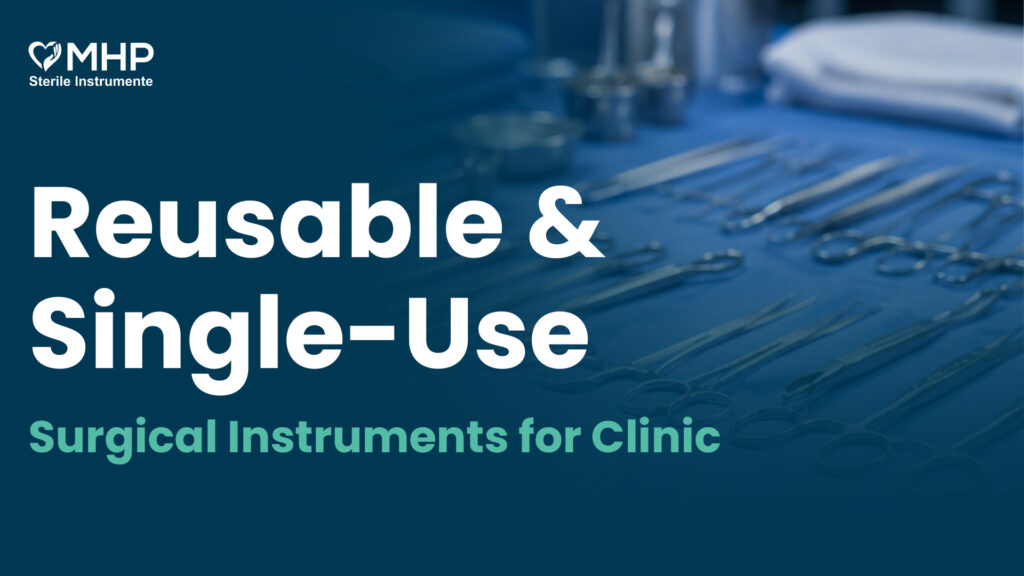
Reusable and Single-Use Surgical Instruments for Clinic
When your clinic must choose between disposable and reusable surgical instruments, a healthcare provider should prioritize patient care, infection control and the complexity of surgical procedures by sourcing sterile, single-use surgical devices from reputable surgical instruments suppliers who provide quality control, sterile packaging and sterile storage so packaged medical instruments are ready and instruments are ready to use for a single procedure; using disposable surgical tools and disposable medical supplies reduces cross-contamination risk, simplifies sterilization logistics compared with reprocess and reuse of reusable devices such as reusable forceps, and lowers costs related to wear and tear and the cost of reusable forceps in busy hospitals and clinics or surgery centers, while maintaining surgical precision for life-saving procedures through high-quality disposable surgical supplies, precision instruments and surgical kits integrated into supply chain management and inventory management across healthcare facilities, all without sacrificing quality or medical excellence in modern healthcare facilities and operating rooms handling advanced medical devices and medical equipment for specific procedures.
Understanding Surgical Instruments
Understanding surgical instruments requires balancing the benefits of disposable and reusable options: clinics and hospitals and clinics often choose single-use, disposable surgical tools and disposable medical supplies for infection control and to ensure instruments are ready to use in sterile packaging, while other settings favor reusable surgical instruments such as stainless steel forceps and reusable forceps that can be sterilized and reprocessed to reduce long-term cost and waste; procurement and supply chain management must evaluate surgical instruments supplier reliability, quality control, and inventory management to provide high-quality surgical supplies, surgical kits and packaged medical instruments are ready for specific procedures, and surgeons and healthcare providers must consider surgical precision, sterility, and the complexity of surgical procedures when they choose between disposable and reusable medical devices, weighing factors like medical waste, the cost of reusable forceps, wearable tear from repeated reuse, sterile storage, and the need to prevent cross-contamination during life-saving procedures in operating rooms, surgery centers and other healthcare facilities.
Types of Single-Use Surgical Instruments for Clinic
MHP Sterile Instruments catalog includes scissors, scalpels, and blades for cutting and dissecting. It also features forceps and clamps for grasping and holding. Retractors and speculums are offered for exposure. Needle holders and staplers are available for suturing and closure. Mayo and Metzenbaum scissors, operating scissors (blunt/sharp), and surgical scalpels and blades are stocked. Tissue and hemostatic forceps, precision needle holders, and surgical clamps for general and vascular procedures are also available. Self-retaining and handheld retractors, as well as vaginal speculums and specialty exposure devices, are part of the hospital inventory. Hemostats and vascular clamps are listed. Mayo-Hegar and Crile-Wood needle holders, staplers, and closure tools are also provided.
Importance of Sterility in Surgical Tools
Sterility is a very important consideration in any surgical environment, especially in hospitals. Surgical instruments should be manufactured and packaged in sterile environments using proper hygiene procedures. Good suppliers utilize state-of-the-art sterilization technologies, such as autoclaving, gamma irradiation, or ethylene oxide, to achieve sterilization. Sterile packaging is a baseline requirement for surgical instruments. Instruments arrive cleanroom-packaged, clearly labeled, and ready for OR use. Documentation is included to support compliance audits at medical practices, ASCs, and clinics.
High-Quality Surgical Instruments: What to Look For
High-quality surgical instruments in hospitals are made from either medical-grade stainless steel or special alloys. These materials used in hospitals are also specifically developed to withstand repeated sterilization cycles. Precision manufacturing reinforces functional quality by ensuring that instruments operate correctly. This minimizes the risk of instrument malfunction during clinical procedures. Healthcare facilities, including hospitals as well, should request product specifications, durability information, and sterilization compatibility information. Surgical instruments built for performance, sterility, and durability are essential. The majority of surgical instruments are made from 304 or 316 stainless steel for their strength, corrosion resistance, and sterilizability. Tools with tungsten carbide inserts offer improved sharpness and durability. Titanium options provide strength with reduced weight. Ergonomic coatings offer better grip and handling during long procedures. All materials must be validated to meet ISO and FDA standards.
Disposable vs. Reusable Surgical Instruments
When you source sterile disposable surgical instruments for your clinic, prioritize suppliers that provide disposable items and disposable devices alongside other medical products and surgical supplies and pharmaceutical products to ensure inventory continuity; although some clinics consider using reusable items to reduce waste, the use of disposable instruments can simplify logistics and reduce cross-contamination risks because disposable items must be sterile on arrival and support maintenance of a sterile field during any attempt to perform a surgical procedure. Choosing between using reusable and disposable instruments depends on cost, environmental policy, and the specific procedure, but when patient safety and consistent surgical outcomes are the priority, using disposable instruments from reputable vendors often yields predictable sterility, simplified handling, and streamlined regulatory compliance.
Advantages of Disposable Surgical Tools
Single-use surgical tools match the need for precision, efficiency, safety, and accountability in contemporary clinics. Preventing infections is a major factor propelling the usage of disposable surgical instruments. The risk associated with reprocessing instruments does not arise with disposable instruments. Every instrument comes sterilized, unused, and is discarded after the first use, maintaining isolation between procedures. Single-use instruments are especially useful for outpatient surgery centers and specialty clinics. They reduce preparation and turnaround time. They make scheduling and case planning simpler and ensure the immediate availability of instruments. Single-use instruments have optimal performance because they are standardized. Disposable surgical tools in hospitals as well simplify regulatory compliance. Staff in hospitals are also not burdened with manual cleaning, inspection, sterilization cycle monitoring, instrument assembly and packaging, and storage and tracking of reusable sets. Single-use instruments are reliable and safe.
Benefits of Reusable Surgical Instruments
Reusable surgical tools can be used for clipping, scratching, scraping, sewing, cutting, retracting, or drilling. They are also designed to be reused after sterilization or disinfection in hospitals. Examples include reamers, scalpels, drill bits, excavators, chisels, certain saws, and sternum retractors. Reusable instruments that have been properly maintained in hospitals are easier to use than stainless steel and disposable plastic units. They also generate less waste in hospitals as well. They ensure sterile, high-quality performance in hospitals and non-hospital environments. High-quality surgical instruments provide superior longevity to low-quality instruments. They also incur minimal service expenditures, and their environmental costs are low. The initial cost of a diamond blade can be an economical choice if it is properly cared for.
Learn more about our recent article on Orthopaedic Surgical Instruments: Managing Bone Fractures.
Choosing Between Disposable and Reusable Options
The current norm within most clinics in Germany and Switzerland is a combination of core instruments and single-use instruments. This approach enables optimal utilization of safety, efficiency, and capability. Newer surgical techniques can dictate the choice between reusable and disposable instruments. For less-invasive 25-gauge vitrectomy, small and fragile instruments are used. With these, reusables tend to break more easily, are difficult to clean, and are expensive to repair. It is actually cost-effective to use disposables in this scenario. The popularity of diamond knives for small-incision cataract surgery in hospitals also illustrates how a reusable product can outperform a disposable one. The risk of damaging an expensive diamond blade in hospitals can also be virtually eliminated with proper care and cleaning. Most clinics and hospitals prefer to use disposable medical equipment. Generally speaking, going with disposable instruments is the smarter option.
Procurement and Supply Chain Management
Effective procurement and supply chain management for a clinic requires choosing between disposable and reusable surgical instruments with attention to sterility, cost-effectiveness, and infection control; partnering with a reliable surgical instruments supplier ensures high-quality disposable surgical tools and sterile packaging so packaged medical instruments are ready and instruments are ready to use for a single procedure, while inventory management and supply chain management reduce stockouts of disposable medical supplies and surgical kits, minimize medical waste, and maintain sterile storage for disposable devices and reusable items that must be sterilized or reprocessed; surgeons and healthcare providers should weigh the benefits of single-use instruments such as disposable scalpels and forceps against reusable surgical instruments like stainless steel reusable forceps considering wear and tear, sterilization requirements, quality control, and the overall cost of reusable forceps and reusable devices for hospitals and clinics performing complex surgical procedures and life-saving procedures.
Finding a Reliable Surgical Instruments Supplier
Healthcare procurement teams must establish a systematic process to evaluate key criteria when selecting suppliers of surgical instruments and supplies. Medical instruments must be compliant with internationally endorsed regulatory requirements, such as ISO certification, CE marking, and national authority requirements. All hospitals should verify the documentation from potential suppliers and ensure that they have documented procedures for manufacturing compliant instruments. The supplier’s size and experience in supplying healthcare facilities should be evaluated. The supplier’s ability to consistently meet or exceed quality expectations is important. The availability of necessary technical documentation and user instructions for the surgical instruments offered should be confirmed. The supplier’s logistics capabilities and after-sales support services are key considerations. Hospitals commonly evaluate instrument performance by conducting a sample test or pilot purchase prior to a long-term contract. MHP Sterile Instruments is FDA-registered and compliant, CE-certified, and ISO 13485–certified for medical device quality systems.
Inventory Management for Surgical Supplies
Inventory management of surgical supplies and sterile instruments is crucial for cost savings in operating rooms. The primary objective of an inventory management system in a healthcare environment is to reduce inventory costs without sacrificing service level. Operating rooms are cost centers, accounting for about 60% of total hospital costs, even though they generate a large proportion of the hospital’s revenue. Any systematic cost reduction in ORs would significantly impact the nation’s economy. Surgical supplies and sterile instruments are stocked in multiple locations and generally contain more items than other hospital inventories. One difficulty is the trade-off between inventory costs and the level of required service (supply availability) that each surgeon expects. Inventory managers attempt to lower costs, while surgeons expect to have everything on hand. Most hospitals lack a standardized process for managing materials, which is a challenge for them as well. The management of surgical supplies and instruments is significantly influenced by the surgeon’s “preference card”. The preference card is a list of all items and their quantity that a surgeon requires in the OR for a given procedure.
Streamlining the Healthcare Supply Chain
Effective procurement processes in hospitals are also necessary to ensure a continuous supply of medical devices. Digital inventory management systems are commonly used by today’s healthcare organizations to maintain accurate records of inventory levels, usage, and product demand forecasts. Integrating procurement strategies with surgical supply management helps hospitals streamline procurement. Centralized procurement processes in hospitals as well help reduce administrative complexity and enhance transparency. They also leverage bulk purchasing power through long-term agreements with suppliers. The objective of integrated procurement systems for surgical supplies and pharmaceuticals is to coordinate the procurement of medical supplies, pharmaceuticals, and equipment across an integrated supply chain. Benefits include reduced procurement costs through bulk purchasing, improved coordination, simplified inventory management, and faster replenishment of mission-critical supplies.
Learn more about our recent article on Surgical Instrument Maintenance: Enhancing Patient Safety.
Implementing Surgical Instruments in Your Clinic
When implementing surgical instruments in your clinic, sourcing sterile disposable surgical instruments requires careful procurement from a reputable surgical instruments supplier who provides packaged medical instruments that are ready to use and meet quality control and sterility standards; choosing between disposable and reusable surgical instruments involves evaluating infection control, cost-effective supply chain management, and the complexity of surgical procedures so you can decide when to use single-use scalpels, disposable forceps, or high-quality reusable instruments that must be sterilize and reprocess safely. Effective inventory management and supplier relationships reduce the risk of cross-contamination and medical waste while ensuring that surgical kits and disposable surgical supplies are available for life-saving procedures in hospitals, clinics, surgery centers, and other healthcare facilities where patient care and surgical precision depend on state-of-the-art sterile packaging and regulatory-compliant medical device procurement. By balancing disposable medical supplies with reusable items, healthcare providers can control the cost of forceps and other surgical tools, maintain sterile storage, and meet the needs of specific procedures without compromising the performance of precision instruments or the healthcare supply chain.
Integrating Disposable and Reusable Surgical Instruments
The current norm within most clinics in Germany and Switzerland is a combination of core instruments and single-use instruments. This approach enables optimal use of safety, efficiency, and capability. MHP Sterile Instruments offers both reusable and disposable tools, so clinics can tailor their inventory to clinical need and budget.
Training Staff on Surgical Tool Usage
MHP Sterile Instruments offers documentation and guidance on instrument handling, sterilization, and maintenance. We endeavor to support physicians and their assistants worldwide through customized training courses, workshops, and congresses.
Ensuring Compliance with Medical Procedures
Medical instruments must be compliant with internationally endorsed regulatory requirements, such as ISO certification, CE marking, and national authority requirements. All hospitals should verify the documentation from potential suppliers and confirm that they have documented procedures for manufacturing instruments that comply with accepted quality management systems. Documentation is included with MHP Sterile Instruments to support compliance audits at medical practices, ASCs, and clinics. All materials are validated to meet ISO and FDA standards.
FAQ’s
How do I choose reliable suppliers of disposable instruments for my clinic?
Start by shortlisting manufacturers and distributors with proven experience in medical consumables. Verify certifications such as ISO 13485, CE marking for Europe, and FDA 510(k) or establishment registration where applicable. Request company references, review client lists, and ask for product technical data sheets and sterility assurance documentation. Evaluate lead times, minimum order quantities, return policies, and whether the supplier offers traceability and batch records. Consider working with a medical procurement specialist or group purchasing organization (GPO) to access vetted vendors and better pricing.
What regulatory and quality standards should single-use surgical instruments meet?
Single-use instruments must comply with local and international medical device regulations. Common requirements include ISO 13485 quality management, ISO 11137 (sterilization by radiation) or ISO 11135 (ethylene oxide sterilization) standards, CE marking for European markets, and relevant FDA clearances in the U.S. Ensure devices have labeled sterilization method, sterility assurance level (SAL), lot/batch numbers, expiration date, and clear instructions for intended use and disposal. Keep documentation for audits and adverse event reporting.
How can I verify sterility and surgical precision of disposable instruments before purchase?
Request sterility certificates and independent test reports demonstrating the sterilization method and SAL. Ask for product samples and conduct a clinical evaluation to confirm surgical precision—assess blade sharpness, ergonomic handling, tolerances, and material quality. If necessary, commission an independent lab to perform bioburden and sterility testing, as well as mechanical tests of critical performance parameters. Ensure the supplier provides device specifications and inspection criteria for acceptance testing on delivery.
Should I use reusable and disposable instruments together in my clinic?
Combining reusable and disposable instruments is common; disposable instruments reduce the risk of cross-contamination and the reprocessing workload, while reusable precision instruments can be cost-effective for high-quality, durable tools. Develop a policy that defines which procedures use single-use items versus sterilizable reusable instruments based on infection control, cost analysis, environmental impact, and clinical performance. Ensure reprocessing capabilities, validated sterilization cycles, and maintenance protocols for reusable items to maintain safety and regulatory compliance.
What packaging, labeling, and traceability features are essential for single-use surgical supplies?
Packaging must remain sterile until the point of use and be clearly labeled with the product name, lot number, expiration date, sterilization method, storage instructions, and manufacturer contact information. Preferred packaging includes peel pouches or rigid sterile trays, depending on the product. Ensure the supplier supports batch traceability and provides certificates of analysis and purchase documentation to facilitate recalls or adverse-event investigations. Barcoding and UDI (Unique Device Identification) support inventory control and regulatory traceability where required.
How do I evaluate costs and inventory management for disposable instruments?
Perform a total cost of ownership analysis that includes unit price, shipping, storage, disposal, and waste-management fees, as well as the impact on staff time and reprocessing costs avoided. Track usage rates by procedure type to forecast demand and set par levels. Consider consignment programs, bulk purchasing discounts, or contracts with guaranteed pricing. Implement inventory software with batch control and expiration alerts to reduce waste and ensure surgical precision supplies are always available for patient care.
What are best practices for receiving, storing, and disposing of disposable surgical instruments?
Upon receipt, inspect the packaging for integrity, verify lot and expiration dates, and record batch numbers. Store items in a clean, dry, temperature-controlled area, away from direct sunlight and chemicals, following the manufacturer’s storage instructions. Use FIFO (first in, first out) or FEFO (first expired, first out) rotation. Dispose of single-use sharps and contaminated items per local biomedical waste regulations; use approved sharps containers and regulated medical waste services. Maintain records of disposal and any incidents related to packaging breaches.
How do I establish supplier audits, acceptance testing, and ongoing quality control for precision instruments?
Include supplier qualification steps in procurement: request facility audits (on-site or remote), quality system documentation, and production process descriptions. Define acceptance testing criteria for incoming shipments (visual inspection, dimensional checks, packaging integrity, sterility certificate verification). Implement routine lot sampling and periodic performance audits. Require corrective action plans for nonconformities and include audit and quality clauses in purchase agreements. Maintain a schedule for vendor re-evaluation based on performance metrics such as defect rate and on-time delivery.
For additional technical standards and global guidelines for medical instruments, consult trusted sources such as the World Health Organization (WHO) and the European Commission’s Medical Devices Regulation (MDR). These organizations provide up-to-date information on safety, compliance, and innovation in healthcare.
You can also explore additional educational resources and product insights directly on our website, on pages such as About Us, Our Products, and Contact Us, where we regularly publish updates and technical information about sterile and single-use instruments.